✓ 15+ years in LiFePO4 battery system design · R&D and manufacturing since 2010 📅 Technical Whitepaper · June 2026 · Based on IEC 62477 & UL 9540A test data
48V vs High Voltage LiFePO4 Battery: Which Is Better for Solar Storage Projects?
Choosing between low-voltage (48V) and high-voltage (200V–1000V+) battery architecture is one of the most critical engineering decisions in solar + storage system design. The choice directly impacts system efficiency, installation cost, scalability, and long-term operational safety.
This technical whitepaper compares both architectures across real-world application scenarios—from residential backup to utility-scale storage—and provides a clear decision framework for project engineers and system integrators.
48V LiFePO4 Battery Systems — The Low-Voltage Standard
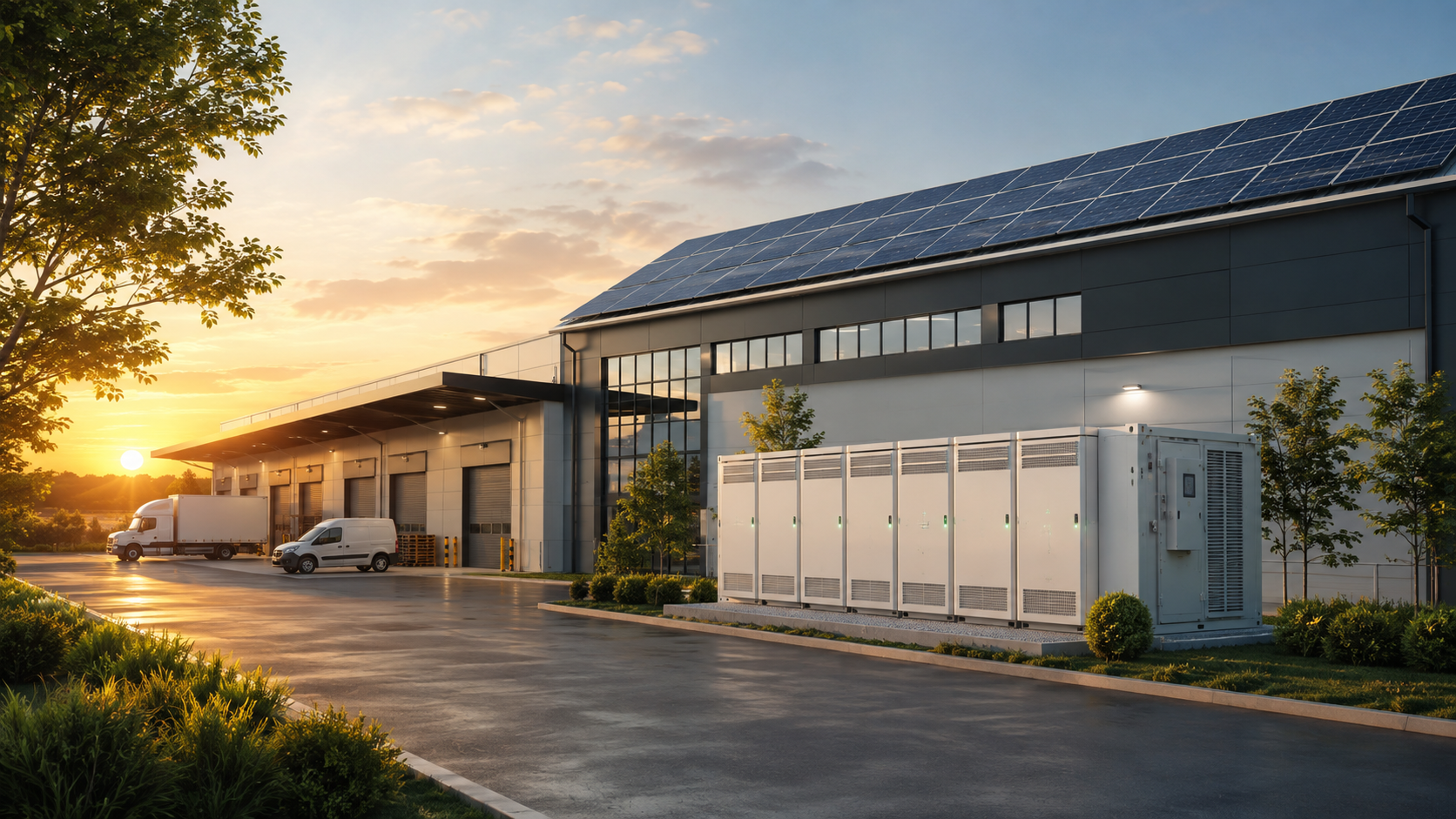
48V systems have become the default choice for residential solar storage and small commercial installations (typically < 50 kWh per cluster). Their popularity stems from three key engineering advantages:
- SELV compliance — Per IEC 62368-1, DC voltages below 60V are classified as Safety Extra-Low Voltage, eliminating electric shock hazards and simplifying installation requirements.
- Modular expansion — Batteries can be paralleled easily (up to 8–16 modules) to scale capacity without complex series balancing circuits.
- Wide inverter ecosystem — Most residential hybrid inverters (Growatt, GoodWe, Deye, SMA) natively support 48V input, offering broad compatibility.
Engineering Limitations
The trade-off comes at higher power levels. At 10 kW output, a 48V system draws ~208A of DC current. This requires thick, expensive copper cabling (≥ 70mm²) and generates significant I²R copper losses. Beyond 50 kWh, parallel expansion reaches practical limits due to busbar current capacity and voltage drop across long cable runs.
Recommended application: Residential backup, off-grid cabins, small retail stores (< 30 kW peak load).
Explore Flyfine's solution: Residential Energy Storage Systems →
High Voltage LiFePO4 Systems — The Industrial Choice
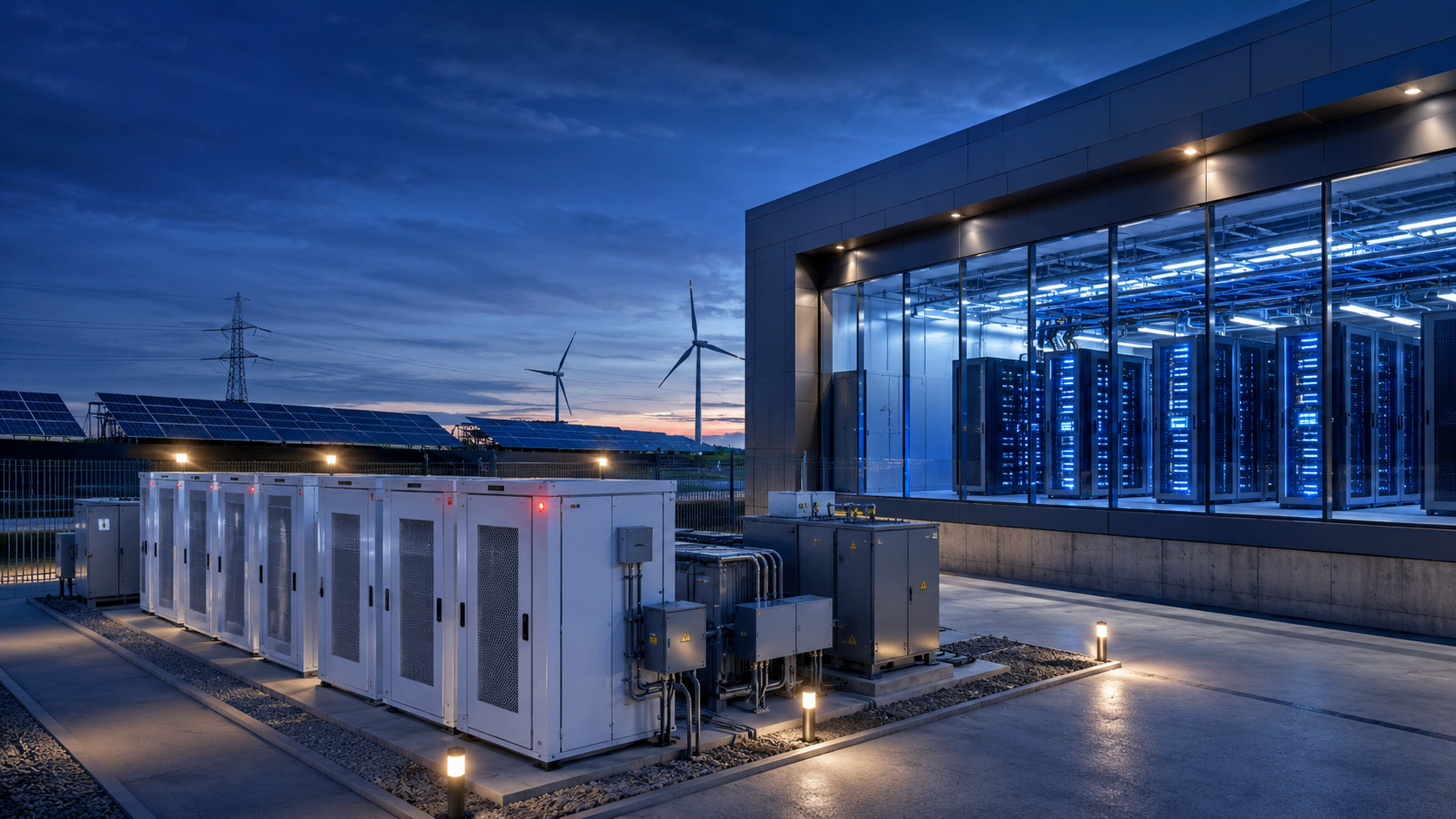
High-voltage architectures (typically 200V, 400V, 512V, 768V, or 1000V+) are purpose-built for industrial, commercial, and utility-scale applications where efficiency and power density are non-negotiable.
- Superior efficiency — At 512V, the same 10 kW output draws only ~20A, reducing I²R copper losses to 1/25th of a 48V system's losses. Overall system round-trip efficiency improves by 5–8%.
- Lower cabling cost — Thinner copper conductors (16mm² vs 70mm²) reduce material cost and installation labor.
- Better PCS integration — Most utility-scale power conversion systems (PCS) are optimized for high-voltage DC inputs, enabling direct 1500V PV + BESS coupling without additional DC-DC converters.
Engineering Considerations
High-voltage systems require more sophisticated BMS architecture with active cell balancing, insulation monitoring, and redundant contactor control. They also mandate trained installers due to high-voltage safety protocols.
Recommended application: Utility-scale solar + storage, EV charging hubs, large C&I peak shaving (> 100 kWh per site).
Explore Flyfine's solution: High Voltage Rack Battery Series (204.8V–512V) →
Why Higher Voltage Means Higher Efficiency — The Physics
The efficiency advantage of high-voltage systems is rooted in a simple equation:
P_loss = I² × R

For the same power output (P = V × I):
• 48V system at 10kW:  I = 208A  →  P_loss ∝ 208² = 43,264
• 512V system at 10kW: I = 19.5A →  P_loss ∝ 19.5² = 380

Result: The 512V system loses just 1/114th of the copper energy.
In real-world terms, this translates to 5–8% higher round-trip efficiency—which over a 10-year project lifecycle can mean hundreds of thousands of dollars in additional revenue for a utility-scale plant.
Reference: IEC 62477-1 safety standard for power electronic converter systems.
Technical Comparison — Side-by-Side
| Parameter | 48V System | High-Voltage (200–1000V) |
|---|---|---|
| Nominal Voltage | 48V DC (SELV <60V) | 200V – 1000V DC |
| Typical Current @ 10kW | ~208A | ~20A (at 512V) |
| System Efficiency | 90–93% | 95–98% |
| Cable Cross-Section (10kW) | 70mm² (thick, expensive) | 16mm² (thin, economical) |
| Scalability Limit | ~50 kWh per cluster | 1,000+ kWh per cluster |
| Installation Complexity | Low (DIY-friendly) | High (certified electricians required) |
| Safety Certification | IEC 62368-1 (SELV) | UL 9540A + IEC 62477 |
| Best Application | Residential · Small C&I · Off-grid | Utility · Large C&I · EV Fast Charging |
Which Architecture Should You Choose? — Decision Matrix
📌 Choose 48V if your project meets these criteria:
- Total energy storage ≤ 50 kWh
- Peak discharge power ≤ 15 kW
- Installation location is residential or small retail
- You have an existing 48V inverter and want to avoid upgrading
- Local regulations require <60V DC for non-certified installers
📌 Choose High Voltage (200V+) if your project meets these criteria:
- Total energy storage > 50 kWh (or planned expansion beyond)
- Peak discharge power > 20 kW
- Project type is utility-scale, large C&I, or EV charging hub
- You are optimizing for maximum round-trip efficiency (5–8% gain)
- You have certified electrical engineering staff on site
💡 Not sure? Flyfine engineers provide free system sizing consultation based on your load profile and site conditions.
⚠️ Engineering Note — High-Voltage System Reliability:
While high-voltage systems deliver superior efficiency, they introduce a single point of failure risk: if one series-connected module fails, the entire string may shut down. Flyfine's high-voltage rack solutions incorporate cluster-level isolation with individual battery string contactors, ensuring that a single module failure does not take down the full system. This design has been validated through 5,000+ thermal cycle tests at our ISO 17025-certified lab.
Frequently Asked Questions
What is the main difference between 48V and high-voltage LiFePO4 batteries?
The core difference is system voltage architecture. 48V systems operate below the SELV (<60V DC) safety threshold, making them ideal for residential and small C&I projects. High-voltage systems (200V–1000V+) operate at higher voltages, reducing current and I²R losses, which improves overall system efficiency by 5–10% in utility-scale applications.
Is a high-voltage LiFePO4 battery safer than a 48V system?
Both are safe when properly designed with multi-layer BMS protection. 48V benefits from <60V SELV classification per IEC 62368-1, eliminating electric shock risks. High-voltage systems (200V+) incorporate dual contactors, active pre-charge circuits, and rapid discharge resistors to achieve equivalent safety levels. Flyfine's high-voltage racks pass UL 9540A thermal runaway propagation testing.
Can I use a high-voltage battery with my existing 48V inverter?
No. 48V and high-voltage systems require completely different PCS (Power Conversion System) and inverter architectures. They cannot operate on the same DC bus. If you are upgrading, you must replace the inverter and charge controller alongside the battery bank.
How many kWh can a 48V LiFePO4 system scale to?
A 48V system can practically scale to 30–50 kWh per cluster by paralleling up to 8–16 battery modules. Beyond this, high currents (exceeding 600A) create excessive cable heating and voltage drop. For projects exceeding 50 kWh, a high-voltage architecture (200V+) is strongly recommended for both cost and efficiency reasons.
Need Help Choosing the Right Voltage Architecture?
Flyfine provides full-stack OEM/ODM lithium battery solutions with engineering support from concept to commissioning.
📊 Get Free System Sizing Advice 📄 Download Technical Datasheet
* Includes voltage architecture recommendation, cable sizing, and ROI projection