Prepared by: FLYFINE Energy Storage Team
Last updated: August 28, 2026
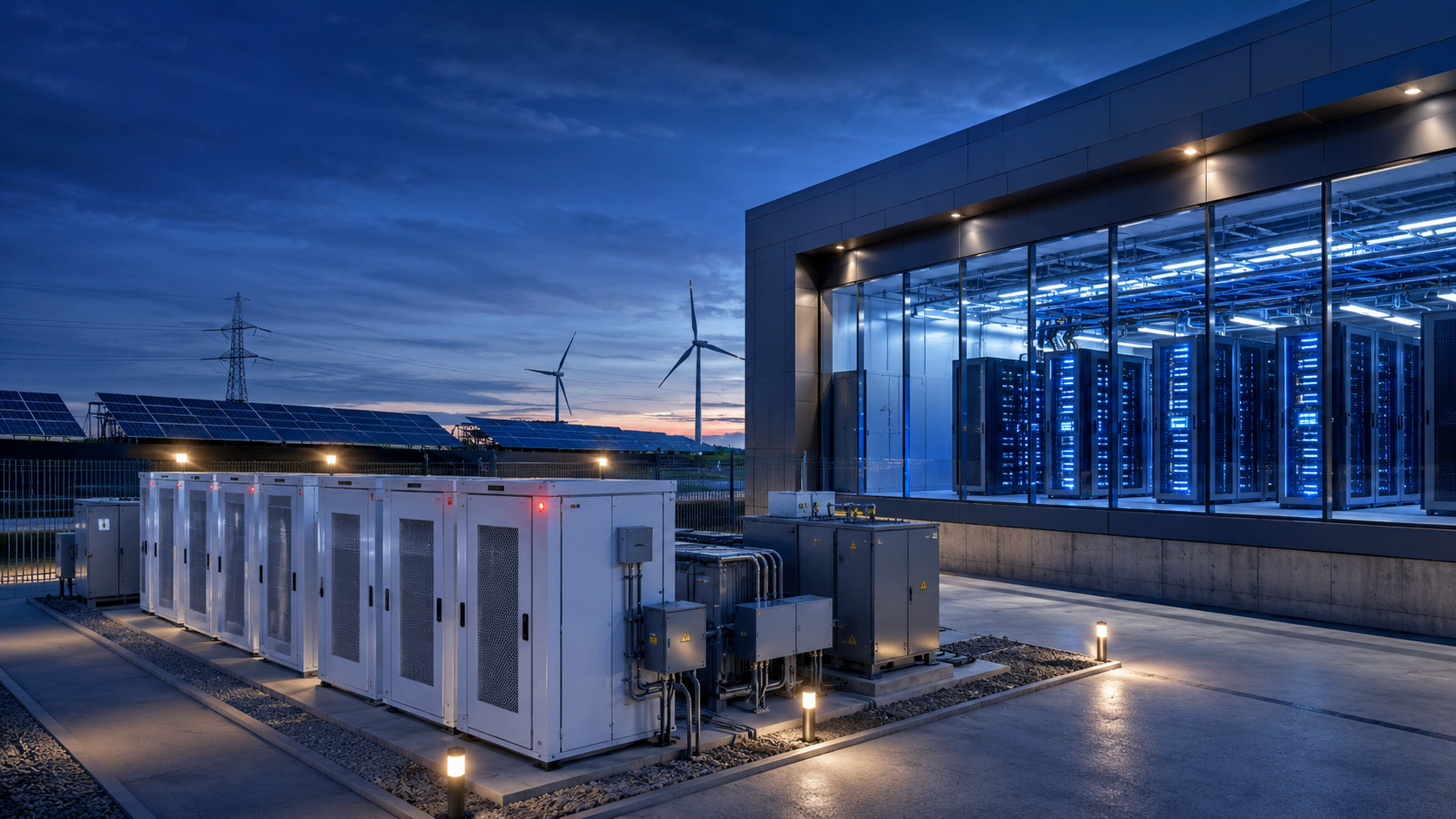
A data center may have enough space for more servers, sufficient cooling capacity and customers ready to use the additional computing power—yet still be unable to expand because its grid connection has reached the limit.
This constraint is becoming more important as AI and high-density computing increase electricity demand. The International Energy Agency projects that global electricity consumption from data centers could more than double to approximately 945 TWh by 2030—slightly more than Japan’s current annual electricity consumption.
In the United States, data centers consumed approximately 4.4% of national electricity in 2023. The U.S. Department of Energy estimates that their share could increase to between 6.7% and 12% by 2028.
These figures explain why data center operators are examining battery energy storage systems. But they do not mean that every facility needs the same battery—or that a commercial BESS can automatically replace an uninterruptible power supply.
Three Different Problems Often Get Called “Backup Power”
When a customer requests battery backup for a data center, the requirement may refer to three substantially different operating conditions.
| Requirement | Typical Duration | Main Objective |
|---|---|---|
| Ride-through power | Seconds to minutes | Maintain continuity until the generator or another power source becomes available. |
| Short-duration backup | Minutes to approximately one hour | Support selected critical loads during a brief grid interruption. |
| Extended backup | One or more hours | Keep critical systems operating during a prolonged grid failure. |
These requirements cannot be priced or designed using the facility’s MW rating alone. Both power and duration matter.
For example, supporting a 1 MW critical load for 15 minutes requires a theoretical 250 kWh of delivered energy.
This is not yet the final battery capacity. Engineering allowances are still required for conversion losses, permitted depth of discharge, temperature, battery ageing, emergency reserve and future load growth.
This simple example demonstrates why “we need a 1 MW battery” is not enough information for a reliable proposal.
Can a BESS Replace the Data Center UPS?
Not automatically.
A UPS is designed to provide immediate power continuity and controlled power quality for sensitive IT equipment. A conventional commercial or industrial BESS is normally designed for energy storage, controlled charging and discharging, peak management and longer-duration power support.
The two systems may use similar battery chemistry, but their functions, switching architecture, response requirements and applicable standards are not necessarily the same.
The IEC 62040-1 standard addresses safety requirements for uninterruptible power systems. A stationary energy storage installation may also need to be evaluated against standards and test methods such as UL 9540, UL 9540A, NFPA 855 and relevant parts of the IEC 62933 series, depending on the project location.
Where Battery Storage Can Create Daily Value
Backup capacity is necessary, but a battery that only waits for an outage may remain unused for most of the year. Where the facility architecture and reliability policy allow it, part of the battery capacity can perform additional functions.
Peak shaving
A BESS can discharge when site demand approaches a defined grid or transformer limit. This may reduce utility demand charges or support short load peaks that exceed the facility’s normal grid connection capacity.
Peak shaving is most suitable when the load profile contains identifiable, limited-duration peaks. If the site remains above its grid limit for many hours, substantially more battery energy—or another power source—may be required.
Load shifting
In markets with time-of-use electricity tariffs, the system can charge during lower-cost periods and discharge when electricity prices rise.
The economic result depends on the tariff difference, system efficiency, cycling frequency and battery degradation. Electricity prices alone are therefore not enough to calculate the return on investment.
Solar energy utilization
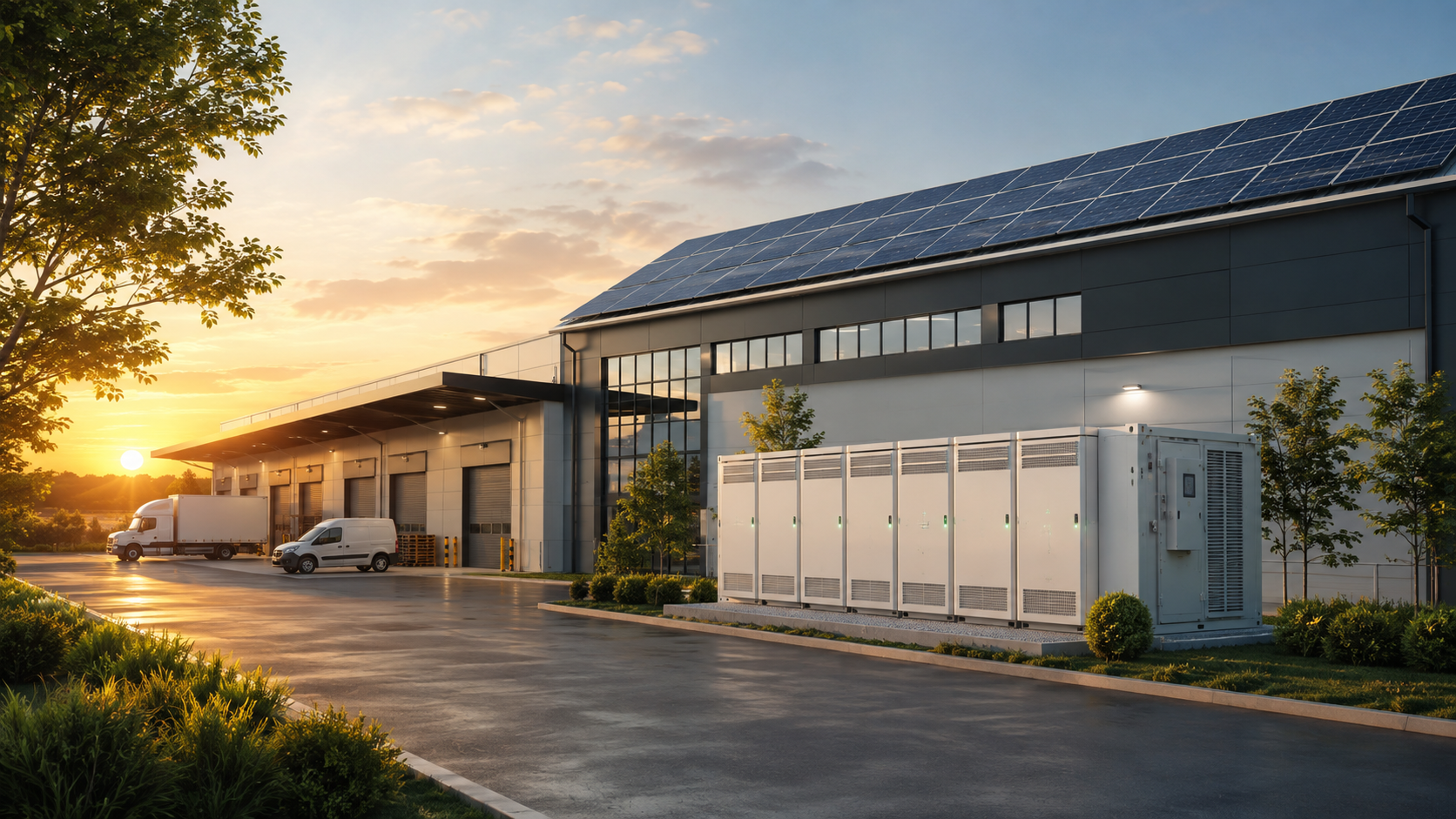
When photovoltaic generation exceeds the facility’s immediate usable demand, the BESS can store part of that energy for later use. This can increase solar self-consumption and reduce the facility’s dependence on grid electricity during selected periods.
The value must be calculated from actual solar production, the facility’s load curve and the physical area available for PV installation.
Generator coordination
Battery storage may cover short disturbances, reduce unnecessary generator starts or help a generator operate within a more stable loading range.
For longer outages, the BESS and generator can operate as a coordinated hybrid system. The battery handles rapid load changes, while the generator provides energy when longer operating time is required.
The objective is not necessarily to remove the generator. It is to avoid starting and operating it when the full generator capacity is not genuinely required.
The Main Design Conflict: Resilience Versus Daily Cycling
Backup power, peak shaving and solar storage may all be useful, but they compete for the same stored energy.
If most of the battery is discharged to reduce a demand peak, less energy remains available for an unexpected grid outage. If the operator permanently reserves nearly all capacity for emergency use, the BESS may provide limited daily economic value.
A data center project therefore needs a defined state-of-charge policy. The energy management system may maintain a protected emergency reserve and make only the remaining capacity available for daily operation.
The appropriate reserve depends on:
- The critical load and required backup duration
- The existing UPS autonomy
- Generator start-up time and operating strategy
- Historical grid reliability
- System redundancy requirements
- Battery ageing assumptions
- The operator’s acceptable level of risk
Safety Must Be Evaluated Before Product Selection
Battery chemistry is only one part of energy storage safety. Project evaluation should also address cell and module testing, electrical protection, fault isolation, thermal management, ventilation, fire detection, emergency shutdown and installation separation distances.
UL 9540 addresses energy storage system and equipment safety, while UL 9540A provides a test method for evaluating thermal runaway fire propagation.
NFPA 855 addresses the installation of stationary energy storage systems in jurisdictions where it has been adopted.
What Information Is Required Before BESS Sizing?
A credible recommendation should begin with operating data rather than a catalogue model. For a preliminary technical assessment, the project team should provide:
- Project country and installation location
- Total facility load and identified critical load
- Representative interval load profile
- Required backup duration
- Grid voltage and frequency
- Available grid connection capacity
- Existing UPS architecture and autonomy
- Generator rating and start-up sequence
- Existing or planned photovoltaic capacity
- Indoor, outdoor or containerized installation
- Ambient temperature and environmental conditions
- Required redundancy level
- Applicable local standards and certifications
- Expected future facility expansion
Without these inputs, any proposed battery power and energy capacity should be treated only as a preliminary estimate.
What a Data Center BESS Can—and Cannot—Solve
Battery storage can create meaningful value where a data center has short-duration demand peaks, limited grid capacity, renewable generation or a requirement for additional backup energy.
It cannot compensate for an electrical architecture that has not been properly coordinated. It also cannot guarantee a financial return without load data, local electricity tariffs and an agreed cycling strategy.
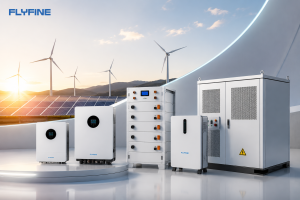
FLYFINE provides commercial and industrial energy storage systems for backup power, peak shaving, renewable energy integration and other project-based applications.
System configuration must be evaluated according to the required power, usable energy, installation environment, electrical architecture and applicable project standards.
Planning a High-Reliability Energy Storage Project?
Share your load profile, critical load, required backup duration, grid capacity and existing UPS or generator configuration with the FLYFINE team for an initial project assessment.
Contact FLYFINESources and Technical References
- International Energy Agency, Energy and AI , published April 10, 2025.
- U.S. Department of Energy and Lawrence Berkeley National Laboratory, Report Evaluating the Increase in Electricity Demand from Data Centers , published December 20, 2024.
- International Electrotechnical Commission, IEC 62040-1: Uninterruptible Power Systems—Safety Requirements .
- UL Solutions, Energy Storage System Testing and Certification .
- UL Solutions, UL 9540A Test Method for Battery Energy Storage Systems .
- National Fire Protection Association, NFPA 855: Standard for the Installation of Stationary Energy Storage Systems .