Commercial Energy Storage System for Factories: Engineering High-ROI Industrial Power
By FLYFINE Technical Engineering Team
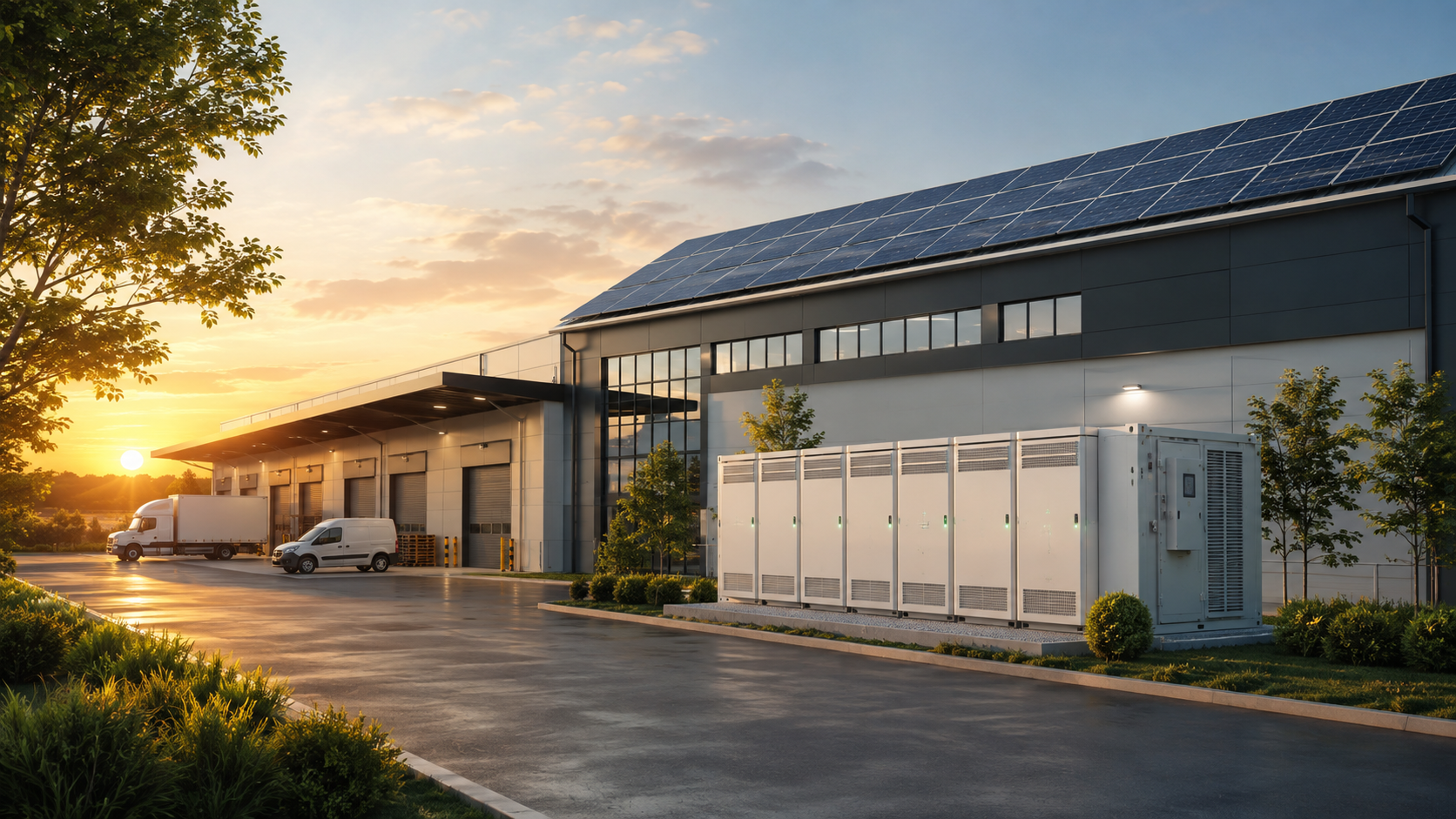
For modern manufacturing plants, energy management is no longer only about securing enough electricity for daily production. Industrial facilities are dealing with heavier load fluctuations, higher peak demand, solar PV integration, weak-grid risks and stricter expectations for operational continuity.
CNC machinery, automated production lines, compressors, refrigeration systems, pumps, HVAC equipment and industrial control systems can create sudden load spikes. At the same time, even a short grid disturbance can interrupt production, affect temperature-sensitive processes or increase operating costs.
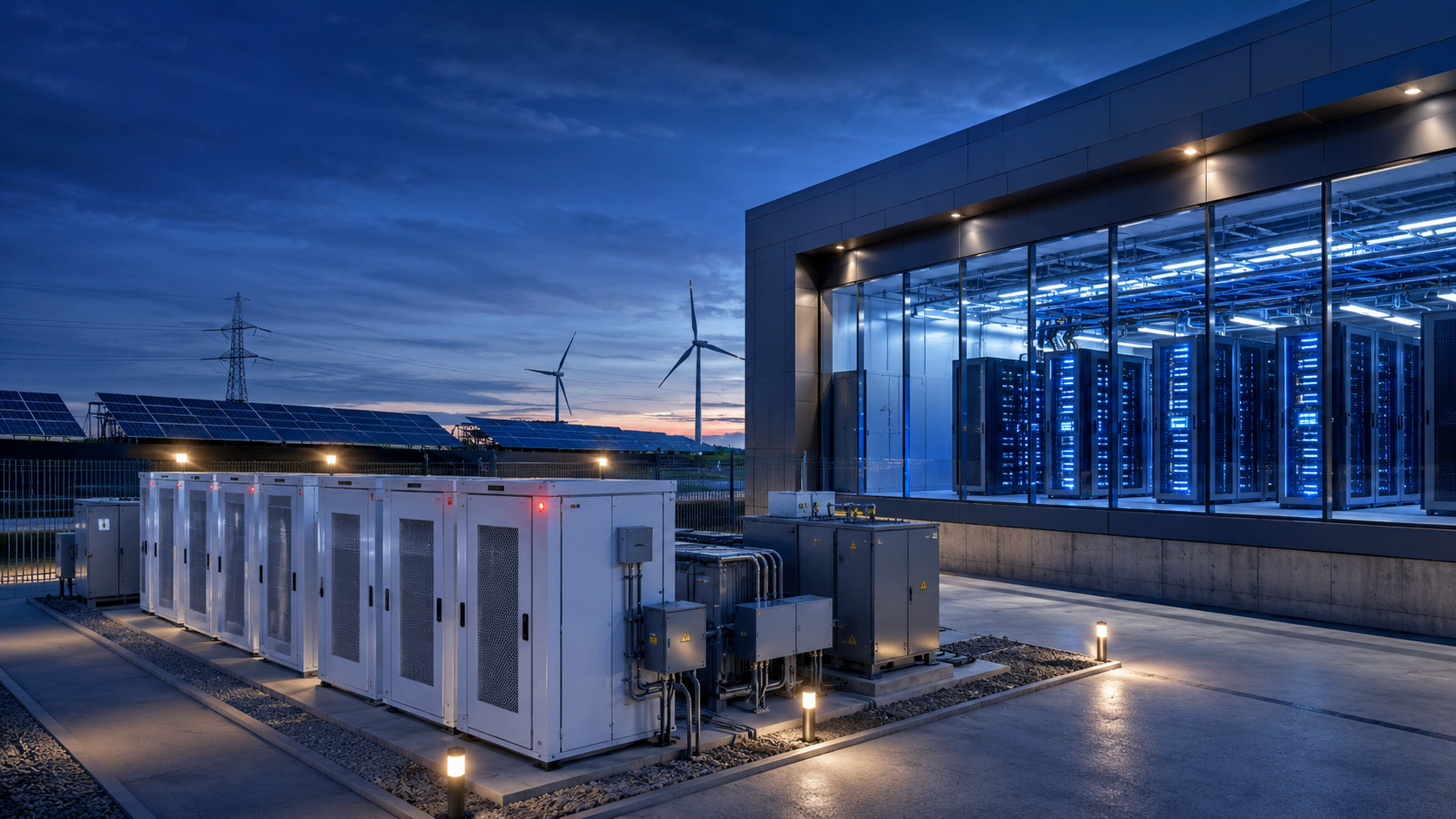
A well-designed commercial energy storage system for factories helps turn electricity from an unpredictable cost factor into a more controllable industrial resource.
Why Factory Energy Storage Is Becoming a Strategic Investment
Battery storage is becoming one of the fastest-growing technologies in the power sector. According to the International Energy Agency, 108GW of new battery storage capacity was deployed worldwide in 2025, 40% more than in 2024. The IEA also notes that lithium iron phosphate, or LFP, batteries now account for around 90% of deployments because they are typically lower-cost and better suited to frequent cycling.
For factories, this trend is not just about renewable energy. It is about practical industrial needs.
Peak Shaving
Reduce high-demand load pressure caused by motors, compressors, HVAC and production line surges.
Critical Backup
Support selected factory loads such as PLCs, refrigeration, security, lighting and communication systems.
Solar Self-Consumption
Store excess rooftop PV energy and shift it to production hours when factory demand is higher.
The Three Core Drivers: Peak Shaving, Backup Power and Solar Self-Consumption
A factory ESS project should begin with the business problem, not the battery capacity.
| Factory Pain Point | Typical Risk | ESS Function |
|---|---|---|
| Peak demand | Short production surges increase grid demand and may raise electricity costs. | Battery discharges during high-load periods to smooth the demand curve. |
| Power interruption | Production lines, PLCs, cold storage or critical systems may stop. | ESS supports selected critical loads during grid disturbances. |
| Solar mismatch | PV generation does not always match production timing. | Battery stores excess solar energy and releases it later. |
This is why commercial ESS should be viewed as an industrial energy control platform, not just a battery cabinet.
Peak Shaving: Reducing High-Demand Load Pressure
In many factories, peak demand occurs when multiple high-power systems operate at the same time. Motors, compressors, pumps, production lines and HVAC systems may overlap during full-load production hours.
A commercial battery energy storage system monitors the factory’s grid intake and discharges when demand approaches a defined threshold. Instead of pulling all power from the grid, the factory uses battery power to reduce the peak load.
| Time Period | Factory Load Condition | ESS Operation |
|---|---|---|
| Off-peak hours | Lower load or lower electricity price | Battery charges from grid or solar PV |
| Solar generation hours | PV output is available | Battery stores excess solar energy |
| Peak production hours | Factory demand rises quickly | Battery discharges to reduce grid draw |
| Emergency condition | Grid instability or outage | Battery supports critical loads if configured for backup |
Engineering note: For a serious C&I ESS proposal, 15-minute interval meter data is especially useful because it shows exactly when peak demand occurs and how long the battery must discharge.
Backup Power: Protecting Critical Factory Loads
For industrial sites, backup power does not always mean running the entire factory during an outage. In many cases, the best strategy is to separate critical loads from non-critical loads.
Typical Critical Loads
- PLC and automation control systems
- Emergency lighting
- Security and monitoring systems
- Communication equipment
- Refrigeration or cold storage
- Pumps and ventilation
Hybrid Backup Strategy
In weak-grid areas, ESS can work with solar PV and diesel generators to improve energy reliability, reduce unnecessary generator runtime and support smoother microgrid operation.
Solar Self-Consumption: Increasing the Value of Factory PV
Many factories install rooftop or ground-mounted solar PV systems to reduce electricity costs. However, solar generation does not always match production demand.
- Solar output may be high during lunch breaks or low-production periods.
- Production demand may increase after solar generation drops.
- Weekend solar generation may exceed on-site consumption.
- Feed-in tariffs may be lower than the value of self-consumed electricity.
| PV + ESS Benefit | Practical Value for Factories |
|---|---|
| Higher self-consumption | More solar power is used inside the factory. |
| Lower grid purchases | Stored solar energy can support production loads. |
| Better load shifting | Energy can be shifted to high-demand periods. |
| Backup reserve | Battery capacity can be reserved for critical loads. |
| Stronger PV project value | Solar PV and ESS work as one coordinated energy system. |
FLYFINE Commercial ESS Technical Platform
A reliable factory ESS must be built for heavy-duty cycling, thermal stability, communication compatibility and scalable system integration.
| Technical Metric | FLYFINE Reference Specification | Project Value |
|---|---|---|
| Battery chemistry | LiFePO4 / LFP | Stable chemistry for frequent cycling and C&I ESS applications. |
| Voltage platform | 204.8V–512V high-voltage rack mount series | Suitable for scalable commercial and larger storage applications. |
| System energy | 20.48kWh–51.20kWh per listed high-voltage series configuration | Flexible modular storage design. |
| Recommended DOD | 90% | Higher usable battery capacity under recommended operation. |
| Cycle life | ≥6000 cycles under listed test conditions | Supports long-term daily cycling applications. |
| Communication | CAN2.0 / RS485 / Wi-Fi | Supports BMS, inverter, PCS and monitoring communication. |
| Working temperature | Charge: 0°C–55°C; Discharge: -20°C–55°C | Supports common commercial and industrial environments. |
| Installation | Rack mounting | Suitable for modular battery room and rack system design. |
System Architecture: What a Factory ESS Includes
An industrial-grade energy storage system is a power electronics ecosystem. The battery is only one part of the system.
| System Component | Function | Engineering Focus |
|---|---|---|
| LiFePO4 battery modules | Store and release energy | Capacity, voltage platform, cycle life, thermal stability |
| BMS | Battery monitoring and protection | Cell voltage, current, temperature, SOC, SOH, fault detection |
| PCS / inverter | AC/DC power conversion | Power rating, grid connection, response speed, efficiency |
| EMS | Energy control and scheduling | Peak shaving, PV priority, backup reserve, time-of-use control |
| Thermal management | Temperature control | Air cooling or liquid cooling based on system size and environment |
| Fire protection | Safety protection | Project-specific design according to local requirements |
| Monitoring platform | Operation visibility | SOC, power flow, alarms, historical data, remote monitoring |
| Communication | System integration | CAN, RS485, Ethernet, Wi-Fi, Modbus or project-specific protocol |
[ Rooftop Solar PV ]       [ Main Utility Grid ]
          │                           │
          ▼                           ▼
    ┌───────────┐               ┌───────────┐
    │  Solar    │               │ Factory   │
    │  Inverter │               │ Main Panel│
    └─────┬─────┘               └─────┬─────┘
          │                           │
          └──────────► ┌───────────┐ ◄┘
                       │  FLYFINE  │
                       │  C&I ESS  │ ◄──► [ Critical Factory Loads ]
                       └───────────┘          Motors, PLCs, Cold Storage
Scalable Deployment Configurations
Smart Cabinet ESS
Best for: Small and medium factories, workshops, commercial buildings, farms, warehouses, localized backup power and EV charging support.
Typical advantages: Compact footprint, easier installation, modular expansion and flexible indoor or outdoor commercial project deployment depending on cabinet design.
Rack-Mounted Battery System
Best for: Battery rooms, modular C&I storage systems, distributed ESS projects and scalable high-voltage configurations.
Typical advantages: Flexible capacity expansion, easy maintenance and structured system integration.
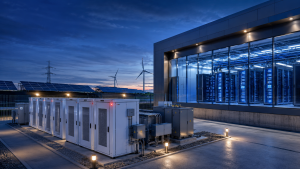
Containerized BESS
Best for: Large manufacturing plants, industrial parks, weak-grid projects, remote sites, microgrids and high-capacity PV integration.
Typical advantages: Integrated battery modules, PCS, EMS, thermal management, fire protection and monitoring in a containerized format.
PV + ESS + Diesel Generator Microgrid
Best for: Weak-grid factories, remote industrial sites, mining sites, islanded power systems and facilities requiring multiple power sources.
Typical advantages: Solar-first operation, battery buffering, generator backup, reduced diesel runtime and stronger energy reliability.
Air-Cooled or Liquid-Cooled ESS: Which Is Better for Factories?
Cooling selection should be based on battery capacity, operating environment, duty cycle and installation conditions.
| Cooling Type | Suitable Projects | Advantages | Considerations |
|---|---|---|---|
| Air-cooled ESS | Small and medium C&I systems, moderate environments | Simpler structure, easier maintenance, lower system complexity | Less suitable for high-density or high-temperature applications |
| Liquid-cooled ESS | Larger C&I ESS, containerized BESS, harsh environments | Better temperature uniformity, stronger thermal control, suitable for high-utilization systems | Higher system complexity and cost |
For high-temperature regions, outdoor installations, high-power cycling or large-capacity projects, thermal management should be reviewed early in the design process.
Commercial ESS Technical Parameters Buyers Should Check
Before selecting a factory energy storage system, B2B buyers should compare more than nominal battery capacity.
| Parameter | Why It Matters |
|---|---|
| Rated power | Determines how much load the system can support at one time. |
| Energy capacity | Determines discharge duration and backup time. |
| Voltage platform | Affects PCS, inverter and system architecture. |
| Cycle life | Impacts long-term operating value. |
| Depth of discharge | Affects usable capacity and battery life. |
| Operating temperature | Important for outdoor and high-temperature industrial sites. |
| Communication protocol | Affects integration with BMS, PCS, EMS and monitoring systems. |
| OEM/ODM support | Important for private-label brands and local market adaptation. |
Key point: A professional factory ESS proposal should clearly define both kW and kWh. kW determines how much power the system can deliver. kWh determines how long the system can deliver that power.
What Data Should a Factory Provide Before System Design?
A reliable ESS design depends on real project data. Before requesting a quotation, factories should prepare the following information.
| Required Information | Why FLYFINE Needs It |
|---|---|
| Project country and location | Affects climate, certification, shipping and grid requirements. |
| Factory type | Helps understand load behavior and application scenario. |
| Daily electricity consumption | Helps estimate energy capacity. |
| Peak load | Determines power rating. |
| Load curve | Shows when peak shaving is required. |
| Critical load list | Defines backup power design. |
| Solar PV capacity | Helps design PV + ESS self-consumption. |
| Grid voltage | Affects PCS, inverter and system configuration. |
| Diesel generator status | Determines hybrid microgrid design. |
| OEM/ODM requirements | Supports branding, private label and local market adaptation. |
FLYFINE Factory ESS Solution Matrix
| Project Type | Recommended Solution Direction | Typical Application |
|---|---|---|
| Small factory or workshop | Cabinet ESS or rack battery system | Backup power, small-scale peak shaving |
| Rooftop solar factory | PV + ESS solution | Solar self-consumption, load shifting |
| Cold storage or food processing | ESS with critical load backup | Refrigeration protection, outage response |
| Industrial park | Larger C&I ESS or containerized BESS | Shared energy management, peak load reduction |
| Weak-grid factory | PV + ESS + diesel generator microgrid | Stable power supply, reduced generator runtime |
| OEM/ODM distributor project | Customized battery or ESS configuration | Private-label ESS product line |
FLYFINE’s commercial ESS solutions support applications including peak shaving, load shifting, backup power, smart energy management, weak-grid operation and modular capacity expansion.
FLYFINE Engineering and Quality Control Support
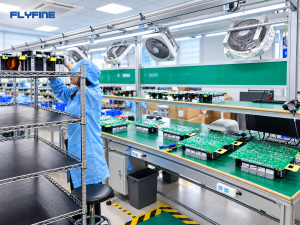
For industrial buyers, supplier capability matters as much as product specification. A factory ESS project involves long-term operation, strict delivery requirements and higher system integration risk than small residential battery projects.
| Quality Stage | Quality Focus |
|---|---|
| Material inspection | Cells, BMS, structural parts and key electrical components. |
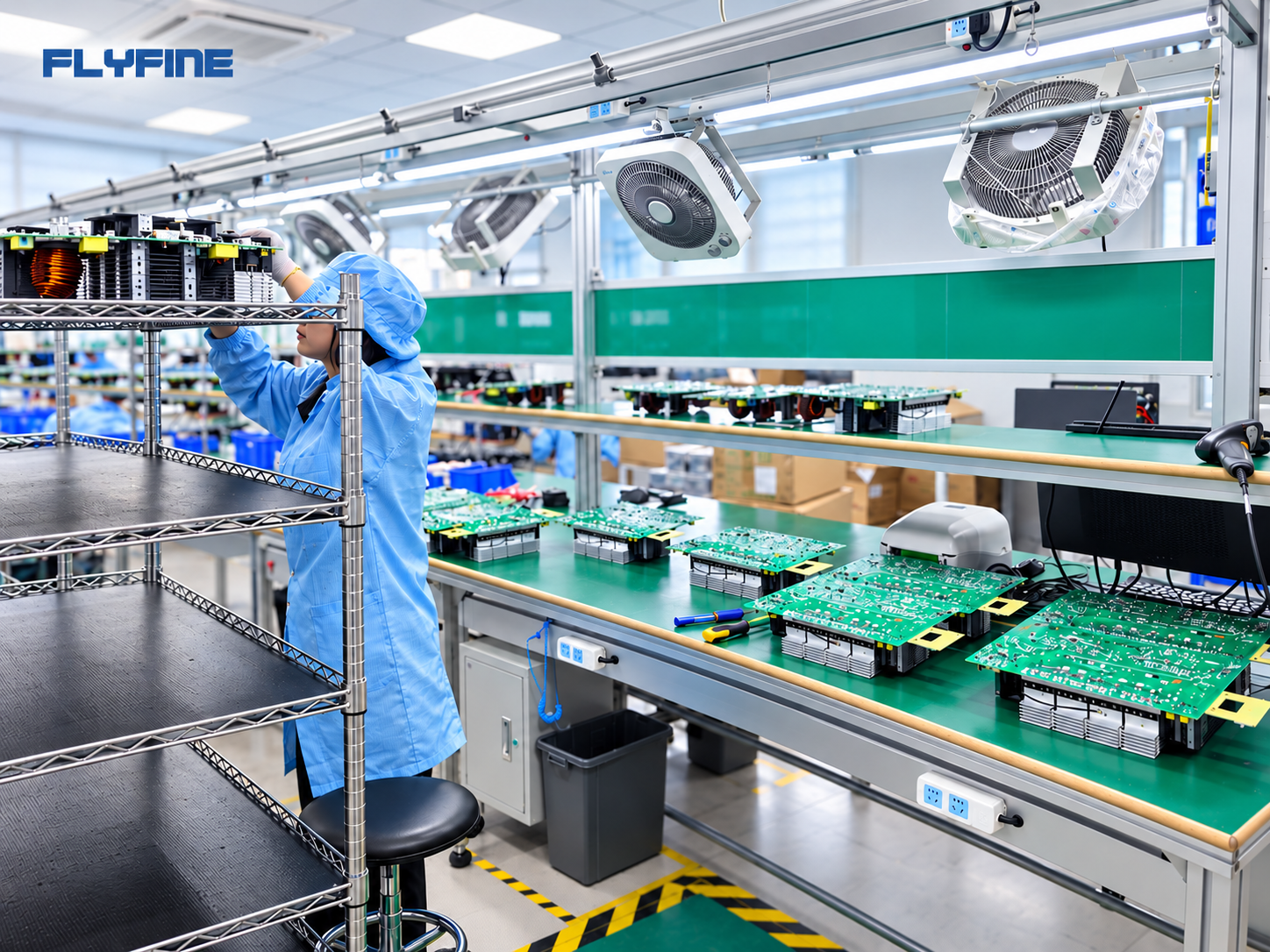
| Assembly control | Wiring, module assembly, cabinet structure and connection quality. |
| Electrical inspection | Voltage, communication, protection logic and system connection. |
| Functional testing | Charge/discharge behavior, monitoring and system response. |
| Safety review | Thermal management, protection design and installation requirements. |
| Packaging inspection | Heavy-duty packaging for lithium battery transportation. |
| Shipment preparation | Product documentation, delivery schedule and export support. |
This process helps reduce project risk for distributors, EPC companies, installers, system integrators and industrial project owners.
OEM/ODM Support for Energy Storage Brands and Project Partners
Many factory ESS customers are not only end users. They may be distributors, EPC companies, installers, system integrators or local energy brands.
For these partners, FLYFINE provides OEM/ODM support for lithium batteries, solar inverters and energy storage systems.
- Logo and label customization
- Packaging customization
- Battery capacity and voltage configuration
- Communication protocol matching
- Cabinet appearance and structure design
- Technical datasheet and documentation support
- Private-label ESS product development
- Project-based system configuration
7-Step Technical Project Engineering Flow
- Load Profile Analysis: Review daily electricity consumption, peak demand and 15-minute interval meter data when available.
- Use-Case Prioritization: Define whether the main goal is peak shaving, backup power, solar self-consumption, diesel generator reduction or hybrid microgrid operation.
- Critical Load Isolation: Separate critical factory loads from non-essential building loads to design a realistic backup strategy.
- Coordinated System Sizing: Calculate both system power rating in kW and energy capacity in kWh according to load curve, backup duration and project target.
- Thermal and Environment Review: Match air-cooled or liquid-cooled system design to the installation environment, temperature range and operating intensity.
- Communication and Grid Matching: Confirm BMS, PCS, EMS, inverter, diesel generator and monitoring communication requirements.
- Technical Review and Quotation: Prepare technical configuration, datasheet, project proposal, delivery plan and OEM/ODM requirements before production.
Secure Your Industrial Energy Strategy
A commercial energy storage system can help factories reduce peak load pressure, improve backup power reliability and increase solar self-consumption. But the right solution depends on real project data.
Send FLYFINE your factory load information, solar PV capacity, backup time requirement, grid voltage and installation environment. Our team can help recommend a suitable LiFePO4 battery storage solution for your project.
FAQs
What is a commercial energy storage system for factories?
A commercial energy storage system for factories is a battery energy storage solution designed to store electricity and discharge it when needed. It can support peak shaving, backup power, solar self-consumption and industrial energy management.
How does ESS help factories reduce peak demand?
ESS can discharge during high-load periods to reduce the factory’s power draw from the grid. This helps smooth the load curve and may reduce demand-related electricity costs, depending on local electricity tariffs.
Can factory energy storage work with solar PV?
Yes. ESS can store excess solar energy and release it later when factory demand is higher or solar generation is lower. This improves solar self-consumption and helps factories use more of their own PV power.
Can ESS replace a diesel generator?
Not always. In many industrial projects, ESS works together with diesel generators. The battery can reduce generator runtime, improve response speed and support smoother microgrid operation.
What battery chemistry is suitable for commercial ESS?
LiFePO4 is widely used in commercial and industrial energy storage because it is suitable for frequent cycling, stable operation and long-term use.
What information should I provide for a factory ESS quotation?
Please provide location, factory type, daily electricity consumption, peak load, load curve if available, solar PV capacity, backup time requirement, critical load list, grid voltage, installation environment and whether diesel generator integration is needed.
Can FLYFINE customize commercial energy storage systems?
Yes. FLYFINE supports OEM/ODM cooperation and project-based customization, including battery capacity, voltage platform, cabinet design, communication matching, technical documentation and private-label support.
Which factories are suitable for commercial ESS?
Commercial ESS can be used in manufacturing plants, cold storage warehouses, food processing factories, textile factories, electronics factories, industrial parks and weak-grid facilities.
Is liquid cooling necessary for every factory ESS project?
Not always. Air-cooled ESS may be suitable for small and medium commercial projects in moderate environments. Liquid-cooled ESS is more suitable for larger systems, higher power density or harsher operating conditions.
How can I get a suitable ESS proposal from FLYFINE?
You can send your project location, load data, solar PV capacity, backup time requirement, grid voltage and installation conditions to FLYFINE. Our team can help review the project and recommend a suitable commercial energy storage solution.