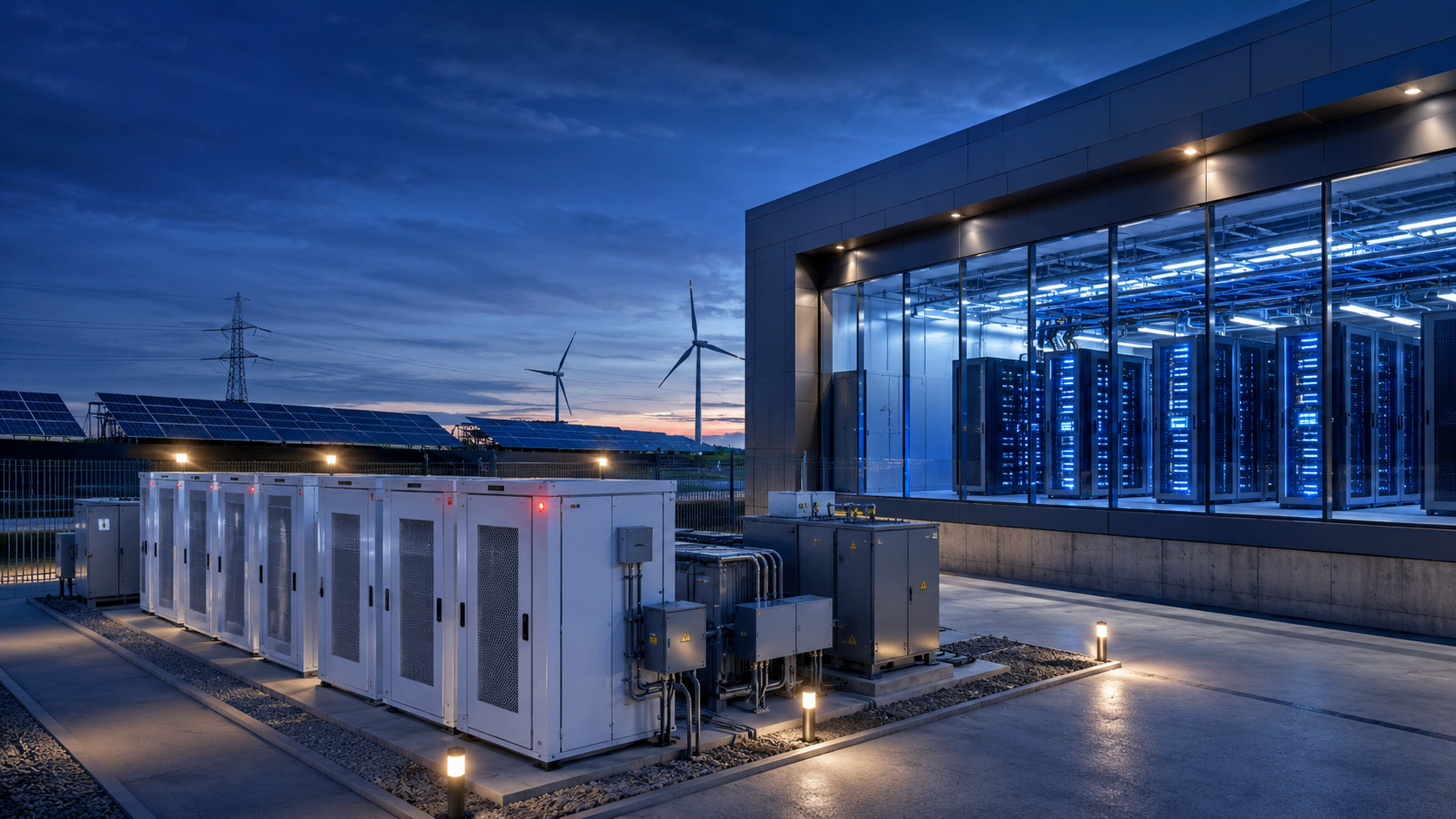
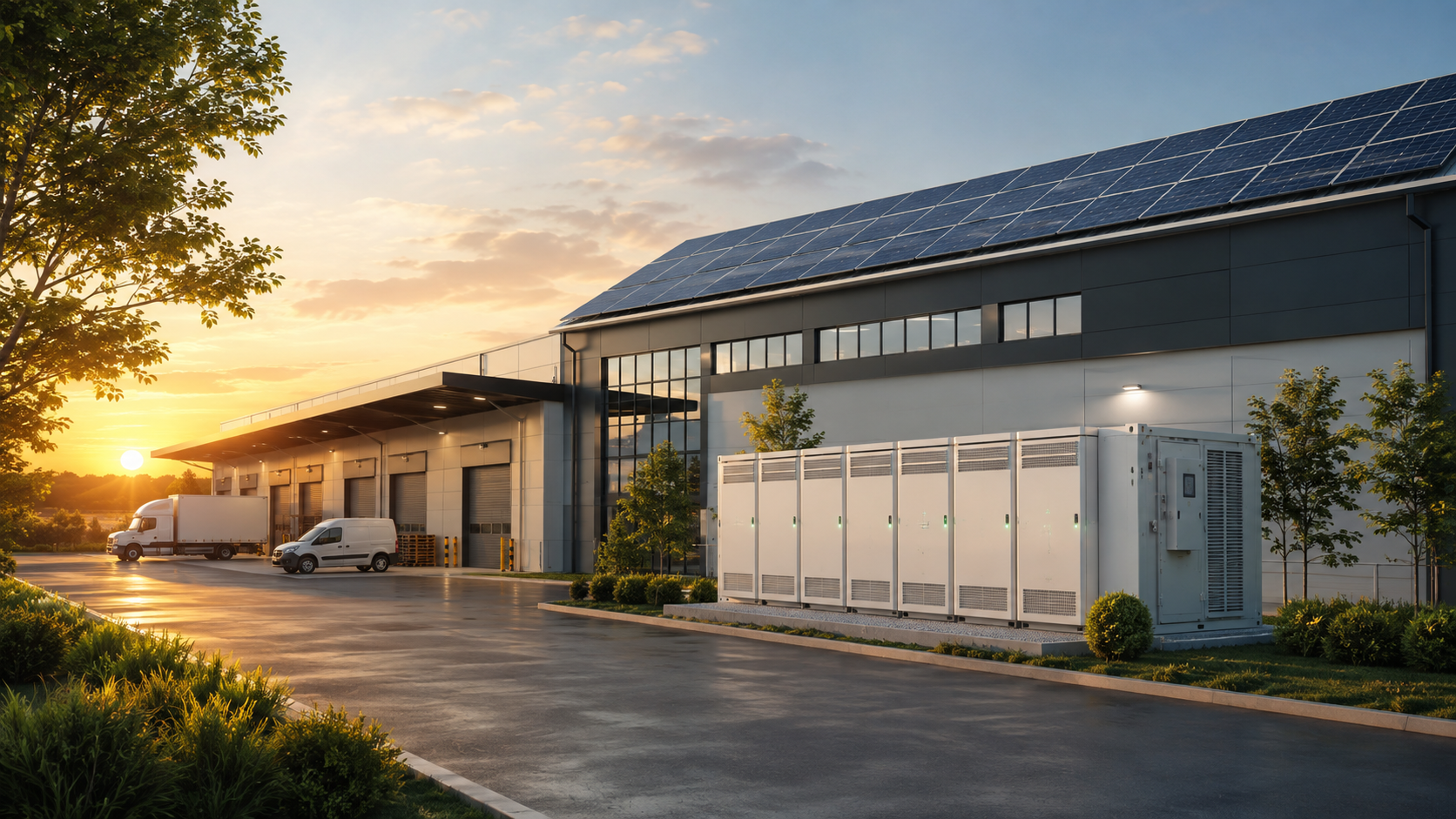
Battery storage demand in the Middle East is moving beyond emergency backup. Factories, commercial buildings, farms, hotels and EV charging operators increasingly need systems that can store solar energy, reduce peak demand and maintain critical operations during grid interruptions.
Renewable deployment is also accelerating across the region. The Middle East commissioned approximately 3.3GW of new renewable capacity in 2024, with Saudi Arabia accounting for more than half of the increase.
For many distributed commercial projects, an air-cooled energy storage cabinet offers a practical balance between usable capacity, integrated system design, installation cost and local maintenance.
The correct cabinet is not selected by battery capacity alone. It must match the site’s load profile, ambient temperature, operating strategy and required power.
Market data: International Energy Agency and International Renewable Energy Agency .
Why LFP Fits Commercial Energy Storage
Lithium iron phosphate has become the dominant chemistry for stationary battery storage because its commercial characteristics match how C&I systems operate.
A commercial battery may charge from rooftop solar during the day and discharge during evening demand. It may also reduce peak loads, support critical equipment or reduce unnecessary generator operation.
In these applications, the priorities are:
- Reliable daily charging and discharging
- Competitive lifetime energy cost
- Stable power delivery
- Scalable system capacity
- Practical local maintenance
LFP chemistry provides a suitable foundation, but it does not guarantee a reliable system by itself. Cell consistency, BMS control, PCS matching, thermal management and cabinet integration still determine real project performance.
Why Choose an Air-Cooled C&I Energy Storage Cabinet?
A commercial project does not always require a large containerized BESS. Many factories, farms, office parks and commercial buildings require a distributed system between approximately 60kWh and 250kWh.
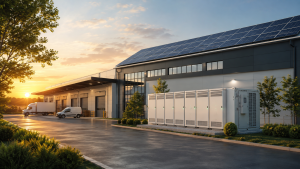
In this range, an outdoor air-cooled cabinet can reduce system complexity while integrating the main energy storage components into one coordinated platform.
Integrated Deployment
Battery storage, BMS, PCS, EMS, protection and communication can be coordinated within one cabinet or system architecture.
Flexible Capacity
Multiple capacity options allow the project to match actual load and backup requirements instead of oversizing the battery.
Simpler Maintenance
Air-cooled systems generally use a less complex thermal-management structure than liquid-cooled systems.
Distributed Applications
Outdoor cabinets are suitable for factories, farms, commercial buildings, charging stations and microgrids.
Where Air-Cooled C&I Cabinets Create Value
Factories and Workshops
Industrial facilities often experience short but expensive load peaks caused by motors, compressors, refrigeration, pumps, HVAC and production equipment.
A C&I battery cabinet can store rooftop solar or off-peak electricity and discharge during high-load periods. It can also reserve energy for selected production, refrigeration, lighting or control loads during a grid interruption.
Commercial Energy Storage for Factories Review how load profiles, peak shaving, solar self-consumption and critical backup influence industrial ESS sizing.Farms and Commercial Buildings
Farms, hotels, offices and retail facilities may generate strong solar power during the day but continue consuming electricity after solar output falls.
An air-cooled LFP cabinet can shift excess PV energy into evening demand and support refrigeration, lighting, communications or other essential equipment.
64kWh Small C&I ESS Cabinet A compact option for small commercial solar storage, backup power, peak shaving and solar-storage-diesel applications.Weak-Grid and Hybrid Microgrids
Some Middle East projects operate with solar PV, utility power, battery storage and a diesel generator. In this architecture, the battery helps absorb excess solar energy, maintain power continuity and reduce inefficient generator operation.
261kWh All-in-One Microgrid ESS An integrated system combining LFP battery storage, PCS, MPPT, EMS and a generator interface for C&I and microgrid applications.Air Cooling or Liquid Cooling?
Air-cooled and liquid-cooled cabinets are not simply low-cost and premium versions of the same product. They address different thermal loads, installation conditions and operating intensities.
| Project Condition | More Suitable Direction |
|---|---|
| Small or medium distributed C&I project | Air-cooled cabinet |
| Moderate daily cycling and power demand | Air-cooled cabinet |
| Simple local maintenance is important | Air-cooled cabinet |
| Limited space and higher energy density | Evaluate liquid cooling |
| High charge and discharge power | Liquid cooling may provide better thermal control |
| High thermal load or intensive operation | Evaluate liquid cooling and active temperature management |
In the Middle East, choosing air cooling only because the initial price is lower can create long-term performance risk.
The decision should consider ambient temperature, cabinet location, airflow, charge and discharge power, daily cycle frequency and the manufacturer’s operating-temperature limits.
241kWh/261kWh Liquid-Cooling Integrated ESS Cabinet An alternative for projects requiring stronger temperature control, higher integration and demanding commercial operation.Do Not Select a Cabinet by kWh Alone
A 200kWh cabinet is not automatically suitable because a facility consumes more than 200kWh per day. Commercial ESS design must balance both energy capacity and output power.
Before selecting a cabinet, the project team should provide:
- Peak load in kW
- Hourly or sub-hourly load profile
- Daily electricity consumption
- Installed or planned solar PV capacity
- Required backup duration
- Grid voltage and frequency
- Existing generator capacity
- Site temperature and installation conditions
- Expected operating mode
- Future expansion requirements
Two facilities may both require 200kWh of stored energy, but one may discharge over four hours while another requires much higher power for one hour. Their PCS and battery configurations should not be identical.
What EPC Contractors and Distributors Should Verify
System Architecture
Confirm whether the project needs a battery-only cabinet, an AC-side system or an integrated PV, battery and grid solution.
Thermal Design
Check the operating-temperature range, airflow requirements, temperature monitoring and any power derating at high ambient temperatures.
PCS and EMS Functions
Verify grid-connected and off-grid operation, peak-shaving control, backup switching, generator communication and remote scheduling.
Safety and Certification
Review battery protection, electrical protection, fire-protection design and destination-market certification requirements.
Technical Support
Confirm commissioning support, remote monitoring, fault diagnosis, firmware assistance and spare-parts availability.
Review FLYFINE’s C&I ESS project cases to compare rack battery, air-cooled cabinet, liquid-cooled cabinet and containerized BESS configurations.
Conclusion
For many distributed Middle East projects, an air-cooled LFP C&I energy storage cabinet provides a practical combination of modular capacity, integrated equipment, daily cycling capability and easier local maintenance.
It can support solar self-consumption, peak shaving, critical backup and hybrid microgrid operation without immediately moving to a large containerized system.
Air cooling is not suitable for every project. The final design must reflect the facility’s load profile, ambient temperature, required power, operating strategy and future expansion plan.
Explore FLYFINE Commercial and Industrial Energy Storage Systems Compare air-cooled, liquid-cooled, rack-mounted, integrated and containerized energy storage solutions.Need a C&I Energy Storage Configuration?
Send the project location, load curve, peak demand, PV capacity, required backup time and installation conditions to the FLYFINE technical team.
Request a Project Configuration