How Battery Energy Storage Reduces Diesel Generator Fuel Consumption in Microgrid Projects
By FLYFINE Technical Engineering Team
For many remote industrial sites, diesel generators are still one of the most reliable power sources. They can start quickly, support heavy loads and provide backup power when the grid is weak or unavailable.
But diesel-only power also creates a serious operating burden. Fuel delivery is expensive. Generator maintenance is frequent. Long runtime increases wear. Low-load operation can reduce efficiency.
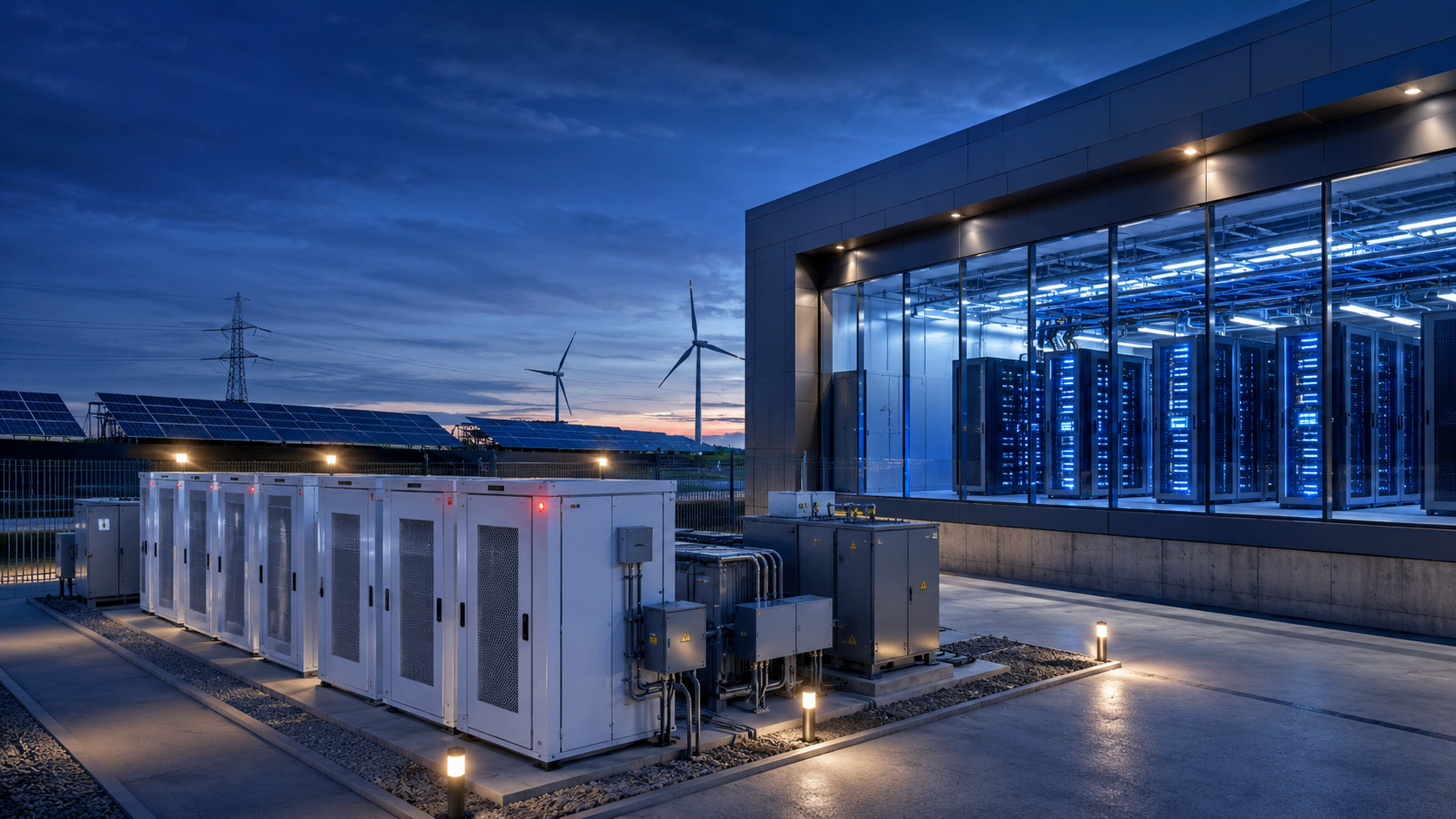
This is where battery energy storage with diesel generator systems becomes valuable. A properly designed BESS does not simply replace the diesel generator. Instead, it works together with solar PV, diesel generators, grid input if available, PCS, EMS and critical loads to create a smarter hybrid microgrid.
Executive Summary
A battery energy storage diesel generator system helps remote and weak-grid sites reduce generator runtime by using the battery to handle short-term load changes, store solar energy and support critical loads.
For project owners, the value is not only lower fuel use. The value is also fewer generator starts, reduced maintenance pressure, smoother microgrid operation and better use of on-site solar PV.
FLYFINE provides commercial and industrial energy storage solutions for BESS diesel generator, solar diesel storage system, off-grid ESS and hybrid microgrid applications.
For projects that require a complete hybrid architecture, FLYFINE’s 750kW / 1.446MWh PV + ESS + diesel generator microgrid project provides a real case reference for integrating LFP battery storage, PCS, STS, MPPT, EMS and diesel generator backup.
Reduce Diesel Fuel Use
Battery storage can store solar energy and reduce unnecessary generator runtime.
Reduce Generator Wear
The battery can handle short-term load spikes and light-load periods.
Improve Off-Grid Stability
ESS buffers PV fluctuation and load changes for smoother microgrid operation.
Important note: Actual fuel savings depend on load profile, PV capacity, generator size, battery capacity, control strategy, diesel price and operating hours. A professional system design should always be based on real project data.
Why Diesel-Only Power Becomes Expensive in Remote Sites
Diesel generators are useful because they are dispatchable. They can provide power when solar is unavailable or when the grid fails. However, using diesel generators as the only power source often creates long-term cost and operation problems.
| Challenge | What It Means for Site Operators |
|---|---|
| High fuel logistics cost | Remote sites may need frequent fuel delivery, storage and handling. |
| Long generator runtime | More operating hours increase maintenance and component wear. |
| Low-load operation | Generator efficiency can drop when load is too low. |
| Frequent start-stop cycles | Repeated generator starts can increase mechanical stress. |
| Load fluctuation | Motors, pumps, compressors and HVAC systems create unstable demand. |
| Solar curtailment | Without storage, excess PV energy may be wasted. |
| Backup risk | If the generator fails, the site may have limited power resilience. |
In many microgrid projects, the goal is not to remove diesel generators completely. The goal is to use them more intelligently.
For factory and industrial park users, diesel reduction is often connected with broader C&I energy management needs such as peak shaving, backup power and solar self-consumption. You can also review FLYFINE’s guide on commercial energy storage systems for factories for related factory ESS applications.
How Battery Storage Works with Diesel Generators
Battery Handles Short Load Fluctuations
Industrial loads are rarely stable. With ESS, the battery can discharge quickly to support load spikes and reduce the generator’s need to ramp up for every short-term change.
Battery Stores Excess Solar Energy
In solar diesel microgrid projects, PV output may exceed site load during strong sunlight periods. With BESS, excess solar energy can be stored and used later.
Battery Reduces Low-Load Generator Operation
The battery can support smaller loads while the generator stays off or operates only when required by SOC, load or backup strategy.
EMS Coordinates the Whole System
The EMS decides when the battery should charge, discharge or reserve energy while coordinating solar PV, generator status, grid input and load demand.
Diesel Generator Runtime Reduction Logic
A BESS diesel generator system works best when it is designed around real operating conditions.
| Site Condition | Diesel-Only Operation | With Battery Energy Storage |
|---|---|---|
| Low load at night | Generator may keep running at low efficiency. | Battery supplies low loads, generator stays off when possible. |
| Sudden motor start | Generator responds to spike. | Battery discharges quickly to support transient demand. |
| High solar output | PV may be wasted if load is low. | Battery stores excess solar energy. |
| Cloud passing over PV array | Generator may ramp up. | Battery smooths PV fluctuation. |
| Grid outage | Generator starts immediately. | Battery supports critical loads before or during generator start. |
| Peak demand period | Generator carries full load. | Battery reduces generator burden during peak load. |
The key benefit is not only fuel reduction. It is better operating control. The generator can be used when it is most needed, while the battery handles fast changes, short-duration loads and stored solar energy.
Real Project Reference: FLYFINE 750kW / 1.446MWh Hybrid ESS
FLYFINE’s 750kW / 1.446MWh PV + ESS + diesel generator microgrid project provides a practical reference for how battery storage can work with diesel generator backup in commercial and industrial applications.
This project integrates PV, LFP battery storage, diesel generator backup, PCS, STS, MPPT and EMS into one hybrid energy system. It is designed for weak-grid, off-grid and backup power scenarios.
| Item | Project Specification |
|---|---|
| Project type | PV + ESS + diesel generator hybrid microgrid |
| Rated power | 750kW |
| Battery capacity | 1.446MWh |
| Battery chemistry | LFP battery |
| Cooling method | Liquid cooling |
| Battery structure | 6 battery clusters |
| Cluster capacity | 241.152kWh each |
| DC voltage range | 648V–876V |
| PCS configuration | 2 × 375kW PCS cabinets |
| Switching system | 750kW STS cabinet |
| Operation mode | Grid-tied and off-grid operation |
For diesel reduction projects, the important point is not only the 1.446MWh capacity. The important point is how the EMS, PCS, STS, PV input and generator access are coordinated.
System Architecture: Solar + BESS + Diesel Generator
A diesel reduction microgrid should be designed as a coordinated system, not as separate equipment.
| System Component | Function in Diesel Reduction |
|---|---|
| Solar PV | Provides daytime renewable energy and reduces generator dependence. |
| LFP battery storage | Stores solar energy and supplies power during low-load or peak periods. |
| Diesel generator | Provides backup power when PV and battery are insufficient. |
| PCS | Converts power between battery and AC load/grid. |
| EMS | Controls source priority, battery SOC, generator start/stop logic and charging strategy. |
| STS / ATS | Supports grid-tied/off-grid switching or source transition. |
| BMS | Monitors battery voltage, temperature, current and protection logic. |
| Critical load panel | Separates essential loads from non-critical loads. |
For large-scale diesel reduction and hybrid microgrid projects, a 1MWh / 2MWh container energy storage system can provide a containerized C&I ESS structure that supports PV storage, backup power, grid-side applications and flexible project deployment.
How the EMS Controls Diesel Generator Operation
The EMS is the control center of a solar diesel storage system. A simple system may only connect battery and generator. A professional microgrid system needs more advanced logic.
| Control Function | Why It Matters |
|---|---|
| Generator start-stop logic | Prevents unnecessary generator runtime. |
| Battery SOC reserve | Keeps backup capacity for critical loads. |
| PV charging priority | Maximizes use of solar energy. |
| Load-following control | Adjusts battery output according to load changes. |
| Anti-backflow control | Helps prevent reverse power flow to generator or grid. |
| Peak load support | Uses battery to reduce generator burden during short peaks. |
| Remote monitoring | Allows operators to check data, alarms and system status. |
For remote sites, EMS logic should be designed carefully. Overly aggressive generator shutdown may reduce backup reliability, while overly conservative generator operation may reduce fuel savings.
Solar Diesel Storage System: Why PV Alone Is Not Enough
Solar PV can reduce diesel fuel consumption, but PV alone has limits. Solar output changes with weather, irradiance, shading and time of day. Remote sites may have heavy evening loads, motor starts or cloudy-day operation.
| Solar PV Without Battery | Solar PV + Battery Storage |
|---|---|
| Solar power must be used immediately. | Excess PV can be stored. |
| Generator may still run during cloudy periods. | Battery can smooth short PV drops. |
| Evening loads depend on diesel. | Stored solar energy can support later loads. |
| PV curtailment may occur during low load. | Battery increases solar utilization. |
| Less flexible backup strategy. | Battery reserve can support critical loads. |
For Spanish-speaking and Latin American project markets, this is often positioned as respaldo energético, microred solar and almacenamiento solar for remote commercial and industrial sites.
If your project requires a complete system-level solution, read FLYFINE’s PV + ESS + diesel generator microgrid solution to understand how solar PV, battery storage, diesel generator, PCS, EMS and STS work together in remote and weak-grid applications.
Where Battery + Diesel Hybrid Systems Are Most Useful
| Application | Diesel Reduction Value |
|---|---|
| Remote factories | Reduces generator runtime and supports critical production loads. |
| Mining sites | Supports off-grid power with solar, battery and diesel backup. |
| Telecom sites | Reduces generator dependence while supporting continuous operation. |
| Agricultural processing bases | Supports pumps, refrigeration and processing equipment. |
| Island microgrids | Reduces diesel-only operation and improves solar use. |
| Construction camps | Provides flexible temporary or semi-permanent power. |
| Cold storage warehouses | Supports temperature-sensitive loads during outages. |
| Weak-grid industrial sites | Improves power stability when grid quality is poor. |
Technical Parameters Buyers Should Confirm
Before selecting an off-grid ESS or solar diesel storage system, buyers should prepare project data.
| Required Parameter | Why It Matters |
|---|---|
| Project location | Affects solar resource, climate, logistics and standards. |
| Daily energy consumption | Helps estimate battery capacity and generator runtime. |
| Peak load | Determines PCS and discharge power requirements. |
| Load curve | Shows when battery discharge is needed. |
| Existing diesel generator rating | Affects generator matching and start-stop logic. |
| Generator operating hours | Helps estimate potential fuel reduction. |
| Fuel cost | Important for ROI calculation. |
| PV capacity | Determines solar contribution and charging potential. |
| Critical load list | Defines backup priority. |
| Required backup time | Determines battery reserve strategy. |
| Communication interface | Affects EMS, BMS, PCS and generator controller integration. |
For accurate sizing, FLYFINE recommends that EPC companies and project developers provide load curve data when available. If 15-minute interval data is available, it can help identify generator runtime patterns, peak load periods and battery discharge requirements more accurately.
Battery and Generator Sizing: kW and kWh Must Be Separated
One common mistake in diesel reduction projects is confusing power and energy. A battery system must be sized in both kW and kWh.
| Term | Meaning | Why It Matters |
|---|---|---|
| kW | Power output | Determines how much load the battery can support at one time. |
| kWh | Energy capacity | Determines how long the battery can support the load. |
| PCS power | AC/DC conversion capacity | Affects discharge, charging and grid/generator interaction. |
| Generator rating | Diesel generator power capacity | Determines backup capability and charging strategy. |
| Battery SOC reserve | Reserved energy for backup | Protects critical loads during abnormal conditions. |
For example, a site with short load spikes may need higher kW power but moderate kWh capacity. A site that wants long generator-off periods may need more kWh capacity.
For larger microgrid projects, battery capacity may be expanded through modular battery cluster architecture. FLYFINE’s lithium ion battery cluster solutions can support customized capacity design for energy storage systems used in factories, commercial sites and renewable energy projects.
Liquid Cooling and Safety for Large BESS Diesel Generator Projects
For large commercial and industrial microgrid systems, thermal management and safety design are critical. High-capacity battery systems may experience frequent charge and discharge cycles. Outdoor environments may involve heat, dust, humidity or limited maintenance access.
| Design Area | What Buyers Should Check |
|---|---|
| Battery chemistry | LFP battery is widely used for stationary ESS applications. |
| Cooling method | Air cooling or liquid cooling depending on project size. |
| BMS protection | Cell-level voltage, current, temperature and SOC monitoring. |
| Fire protection | Detection and suppression design for containerized BESS. |
| Ventilation | Air exchange and abnormal gas management. |
| Electrical protection | Breakers, fuses, insulation monitoring and emergency stop. |
| Monitoring | Real-time operation data, alarms and historical records. |
| Packaging | Heavy-duty transportation protection for lithium battery systems. |
FLYFINE’s hybrid ESS project experience includes liquid-cooled LFP battery storage, PCS, STS, MPPT and EMS integration for grid-tied and off-grid applications.
FLYFINE Solution Matrix for Diesel Reduction Microgrid Projects
| Project Type | Recommended Solution Direction | Typical Use |
|---|---|---|
| Small remote site | Small C&I ESS cabinet | Farms, telecom sites, small workshops |
| Medium commercial project | Outdoor C&I ESS cabinet | Backup power, solar storage, peak shaving |
| Large industrial microgrid | Containerized BESS | Factories, mining sites, commercial parks |
| Solar diesel hybrid project | PV + ESS + diesel generator system | Fuel reduction and backup reliability |
| EPC / distributor project | OEM/ODM customized ESS | Local project delivery and private-label solutions |
FLYFINE’s 1MWh / 2MWh container ESS can support access to load, battery, grid, diesel generator and PV, making it suitable for hybrid microgrid and diesel reduction applications.
For EPC contractors, distributors, system integrators and local energy brands, FLYFINE also supports OEM/ODM energy storage solutions, including battery capacity configuration, cabinet or container layout, branding, technical datasheets and project documentation.
7-Step Engineering Flow for Reducing Diesel Generator Fuel Consumption
- Site Power Assessment: Review daily energy demand, peak load, generator runtime, outage conditions and critical load requirements.
- Diesel Generator Operation Review: Check generator rating, minimum loading requirements, fuel consumption pattern, maintenance schedule and controller interface.
- Solar PV Capacity Review: Evaluate existing or planned PV capacity, solar generation curve and available installation area.
- Battery Capacity and PCS Sizing: Calculate required battery power in kW and energy capacity in kWh according to load profile, PV output and backup strategy.
- EMS Control Strategy Design: Define PV priority, battery SOC reserve, generator start-stop logic, anti-backflow protection and backup mode.
- Safety and Thermal Design: Select cabinet or container layout, air cooling or liquid cooling, fire protection, monitoring and emergency shutdown.
- Technical Proposal and Quotation: Prepare system architecture, datasheet, project configuration, delivery plan, OEM/ODM requirements and commercial proposal.
Advanced Technical FAQs
How does BESS reduce diesel generator fuel consumption?
BESS reduces fuel consumption by storing excess solar energy, supporting short-term load spikes, reducing low-load generator operation and allowing the generator to run only when required by load, SOC or backup strategy.
Can battery storage replace diesel generators completely?
Not always. In many remote and weak-grid projects, diesel generators remain important for long-duration backup. The battery helps reduce generator runtime and improve system flexibility, while the generator provides backup when PV and battery are not enough.
How should the battery capacity be sized for diesel reduction?
Battery capacity should be sized according to daily energy consumption, PV generation curve, generator runtime target, backup time and critical load demand. PCS power should match peak load and expected discharge power.
What is the role of EMS in a BESS diesel generator system?
The EMS coordinates PV, battery, diesel generator, grid and load operation. It controls battery charging, discharging, SOC reserve, source priority, generator start-stop logic and anti-backflow strategy.
Why is anti-backflow protection important for diesel generators?
Diesel generators are not designed to absorb reverse power. Anti-backflow protection helps prevent power from flowing back into the generator under unsuitable conditions. This logic should be configured according to generator model and system architecture.
Can ESS reduce generator maintenance?
It can help reduce maintenance pressure by reducing unnecessary runtime, lowering frequent start-stop operation and buffering short-term load changes. Actual maintenance impact depends on generator operating conditions and system control strategy.
Is solar PV required for diesel reduction?
Solar PV is not always required, but it improves the value of the system. With PV, the battery can store solar energy and reduce generator fuel use. Without PV, the battery can still support load smoothing, backup and generator optimization, depending on the use case.
What data should we provide for a diesel reduction proposal?
Please provide project location, load curve, daily energy consumption, peak load, diesel generator rating, generator runtime, PV capacity, fuel cost, grid condition, backup time requirement and critical load list.
Can FLYFINE customize BESS diesel generator solutions?
Yes. FLYFINE supports OEM/ODM customization for commercial and industrial ESS projects, including battery capacity, voltage platform, PCS, EMS, cooling method, cabinet or container layout, fire protection, branding and project documentation.
Request a Diesel Reduction Microgrid Configuration
A battery energy storage diesel generator system can help remote and weak-grid sites reduce fuel consumption, lower generator runtime, improve solar utilization and support critical loads.
Send FLYFINE your load profile, diesel generator rating, PV capacity, fuel cost, backup time requirement and installation environment. Our team can help evaluate a suitable BESS diesel generator configuration for your project.
Recommended Project Information
- Project location
- Application type
- Daily energy consumption
- Peak load
- Load curve if available
- Existing diesel generator rating
- Generator operating hours
- Fuel cost
- Existing or planned PV capacity
- Required backup time
- Grid condition
- Critical load list
- Installation environment
- OEM/ODM requirements