Commercial and industrial energy users face a common challenge: fluctuating energy costs, unreliable grids and solar investments that need storage to deliver their full return. A commercial energy storage system addresses all three — and FLYFINE has been manufacturing C&I battery storage solutions since 2008. |
This guide is written from a manufacturer’s perspective. It explains what a commercial ESS does, how FLYFINE systems are built for C&I applications, what to specify when planning a project, and how to start a consultation with our technical team.
What Is a Commercial Energy Storage System?
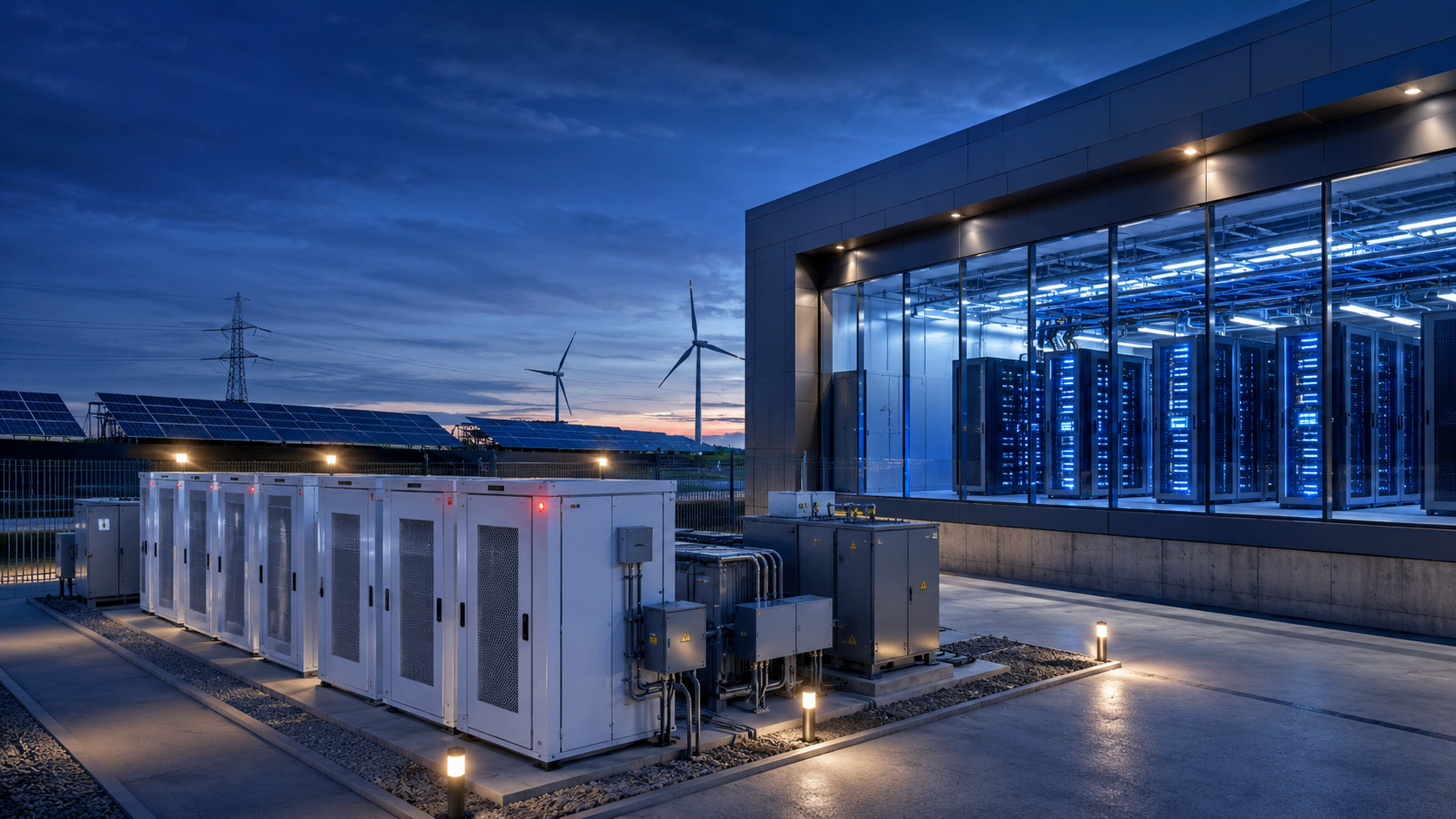
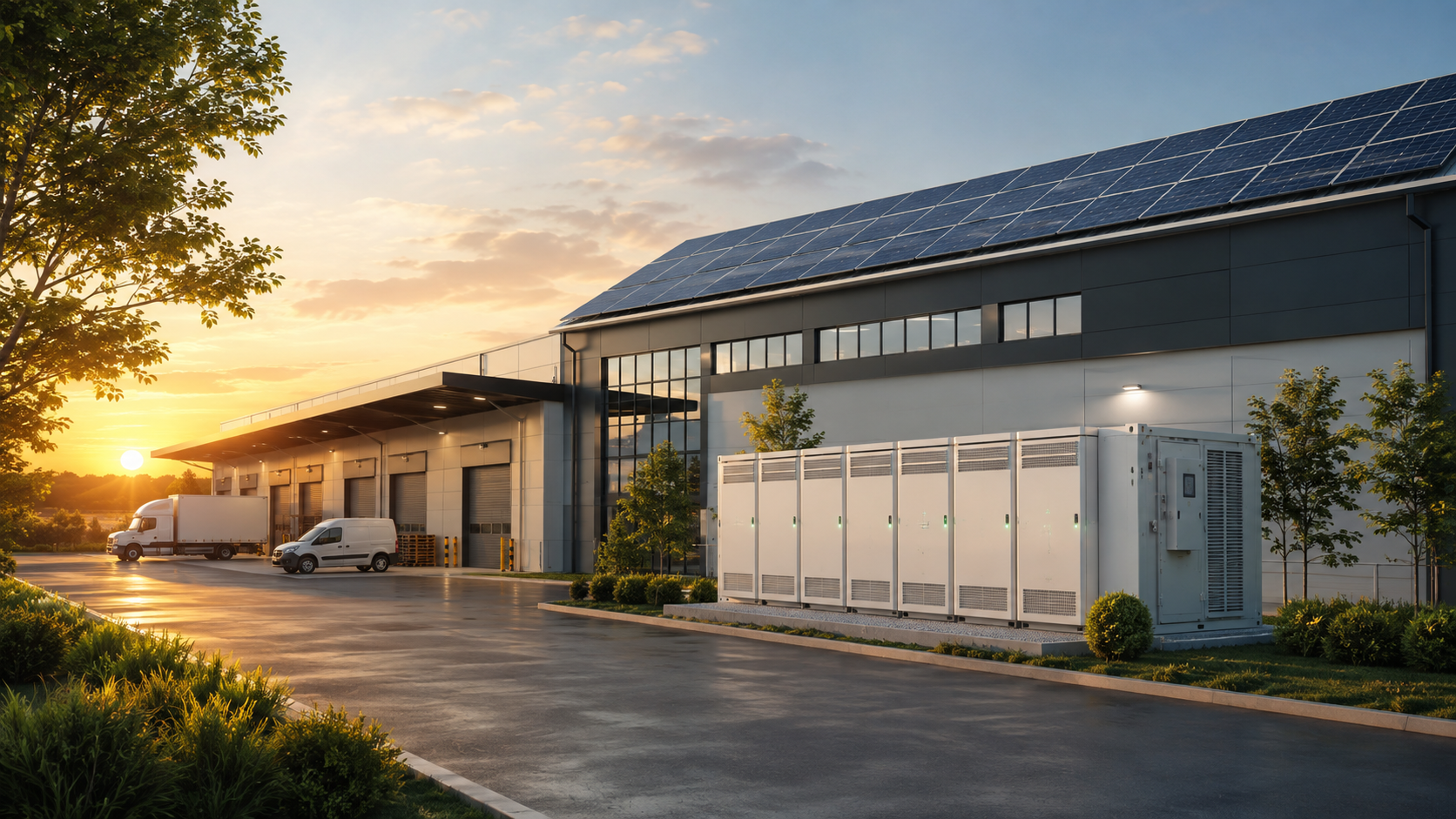
A commercial energy storage system (commercial ESS) is a large-scale battery system designed to store and discharge electrical energy for commercial or industrial facilities. Commercial ESS must handle higher power levels, longer discharge durations, demanding operating environments and strict safety requirements — well beyond what a residential home battery can deliver.
Common commercial ESS applications include:
- Peak demand management — reducing grid demand during high-consumption periods
- Solar self-consumption — storing excess PV generation for use during non-generation hours
- Backup and grid resilience — keeping critical operations running during grid outages
- Off-grid power — providing primary energy supply for remote industrial sites
- Microgrid integration — serving as the storage core of integrated PV-BESS-charging systems
👉 Explore all FLYFINE commercial ESS applications
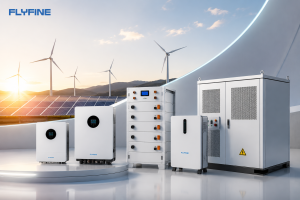
FLYFINE Commercial ESS — Product Range Overview
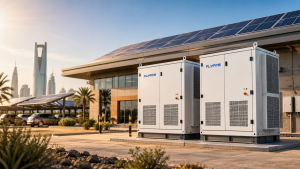
FLYFINE manufactures commercial and industrial energy storage systems from 100kWh to multiple MWh. All systems use Grade-A LiFePO4 cells from CATL, BYD and EVE and are built for high-temperature environments including the Middle East and Africa.
System Type | Capacity | Voltage | Form Factor | Primary Application |
Cabinet ESS | 50kWh – 200kWh | 100V – 200V | Indoor / Outdoor Cabinet | C&I peak management, solar storage |
Containerized 20ft | 500kWh – 1MWh | 500V – 800V | 20ft Container | Large C&I, microgrid, utility |
Containerized 40ft | 1MWh – 4MWh+ | 500V – 1000V | 40ft Container | Utility, large industrial, EPC |
Modular Stack ESS | 100kWh – 500kWh | 100V – 512V | Rack system | Scalable C&I, data centres |
PV+BESS+Charging | Custom | Custom | Integrated system | EV charging + solar + storage |
👉 Full commercial ESS product specifications and datasheets: flyfinebattery.com/commercial-energy-storage/
Integrating Commercial ESS with Hybrid Solar Inverters
For C&I solar-plus-storage projects, the commercial ESS works together with a hybrid solar inverter to manage energy flow between the PV array, battery, load and grid.
FLYFINE manufactures hybrid solar inverters from 3kW to 30kW for smaller C&I applications and integrates with third-party commercial inverter platforms for larger projects. Our EMS supports the following operating modes:
- Self-consumption mode — prioritises solar energy, stores surplus, buys from grid only when needed
- Peak shaving mode — discharges battery during high demand periods to reduce grid draw
- Backup mode — maintains full battery reserve for emergency power supply
- Time-of-use mode — charges during cheap off-peak periods, discharges during expensive periods
- Off-grid mode — operates completely independently from the grid for remote site applications
👉 View FLYFINE hybrid inverter range: flyfinebattery.com/hybrid-solar-inverter-manufacturer-in-china/
👉 Full commercial ESS specifications and datasheets
Key Technical Specifications — FLYFINE Commercial ESS
Specification | FLYFINE Standard |
Battery Chemistry | Grade-A LiFePO4 — CATL, BYD, EVE cells |
Cycle Life | 6,000+ cycles at standard conditions per manufacturer cell spec |
Operating Temperature | -20°C to +55°C standard | High-temp version for MENA and Africa |
Communication Protocol | CAN, RS485, Modbus TCP — compatible with major inverter brands |
BMS | Active balancing BMS with SOC, SOH, fault detection and remote monitoring |
EMS | Smart EMS — peak shaving, self-consumption and backup operating modes |
IP Rating | IP55 standard | IP65 available on request |
Certifications | CE, UL 9540, IEC 62619, UN38.3, RoHS, ISO9001 |
OEM / ODM | Full custom branding, capacity, voltage and configuration available |
Warranty | Standard 5 years — extended warranty for project contracts |
What to Specify When Planning a Commercial ESS Project
Before requesting a quotation, the following technical parameters should be defined. FLYFINE’s engineering team will review these to propose the right commercial ESS configuration for your project.
Parameter | Why It Matters | Typical Range |
Energy Capacity (kWh) | Determines system size and number of modules | 50kWh – 10MWh+ |
Peak Power Demand (kW) | Determines inverter and BMS sizing | 10kW – 2MW+ |
System Voltage | Must match inverter and grid connection spec | 48V / 200V / 500V / 800V |
Discharge Duration | Determines battery depth requirements | 1hr / 2hr / 4hr / 8hr |
Operating Environment | Determines enclosure IP and thermal management | Indoor / Outdoor / High-temp |
Grid Connection | On-grid, off-grid or island mode | Depends on project |
Certifications | Varies by country — affects product selection | CE / UL / IEC / G99 etc. |
FLYFINE Project Delivery Process
For commercial ESS projects, FLYFINE follows a structured process to ensure technical alignment before manufacturing begins:
- Step 1 — Project Brief: Client shares technical requirements and application details
- Step 2 — System Design: FLYFINE engineering proposes system configuration and specifications
- Step 3 — Technical Review: Detailed review of BOM, drawings and communication protocols
- Step 4 — Sample / FAT: Factory acceptance testing with client representative if required
- Step 5 — Production: Full production with quality inspection at each stage
- Step 6 — Delivery and Commissioning: Export documentation, shipping and commissioning support
MOQ depends on system type and capacity. Cabinet systems typically accept sample orders of 1 unit. Contact our team via flyfinebattery.com/commercial-energy-storage/ with your project requirements for specific MOQ and pricing information.
Yes. FLYFINE designs commercial ESS from 48V to 1000V+ depending on project requirements. Custom voltage systems are available through our OEM engineering process. Share your voltage specification via flyfinebattery.com/commercial-energy-storage/
FLYFINE commercial ESS integrates with SMA, ABB, Schneider, Sungrow, Huawei, Growatt and others via standard protocols. Contact us with your inverter specification for compatibility confirmation.
Yes. FLYFINE has supplied commercial ESS projects across the Middle East, North Africa, West Africa, Southeast Asia, Europe and the Americas. We support full export documentation and international shipping.
Cabinet systems: 4 to 6 weeks. Containerized systems: 6 to 10 weeks depending on capacity and configuration. Lead times are confirmed during the technical review stage after project brief submission.