PV + ESS + Diesel Generator Microgrid Solution for Remote and Weak-Grid Areas
By FLYFINE Technical Engineering Team
Remote industrial sites and weak-grid facilities often face a more complex power challenge than standard grid-connected buildings.
For these sites, the issue is not only how to reduce electricity costs. The bigger challenge is how to maintain stable power when the grid is unstable, diesel fuel is expensive, solar generation is intermittent and critical equipment cannot afford unexpected downtime.
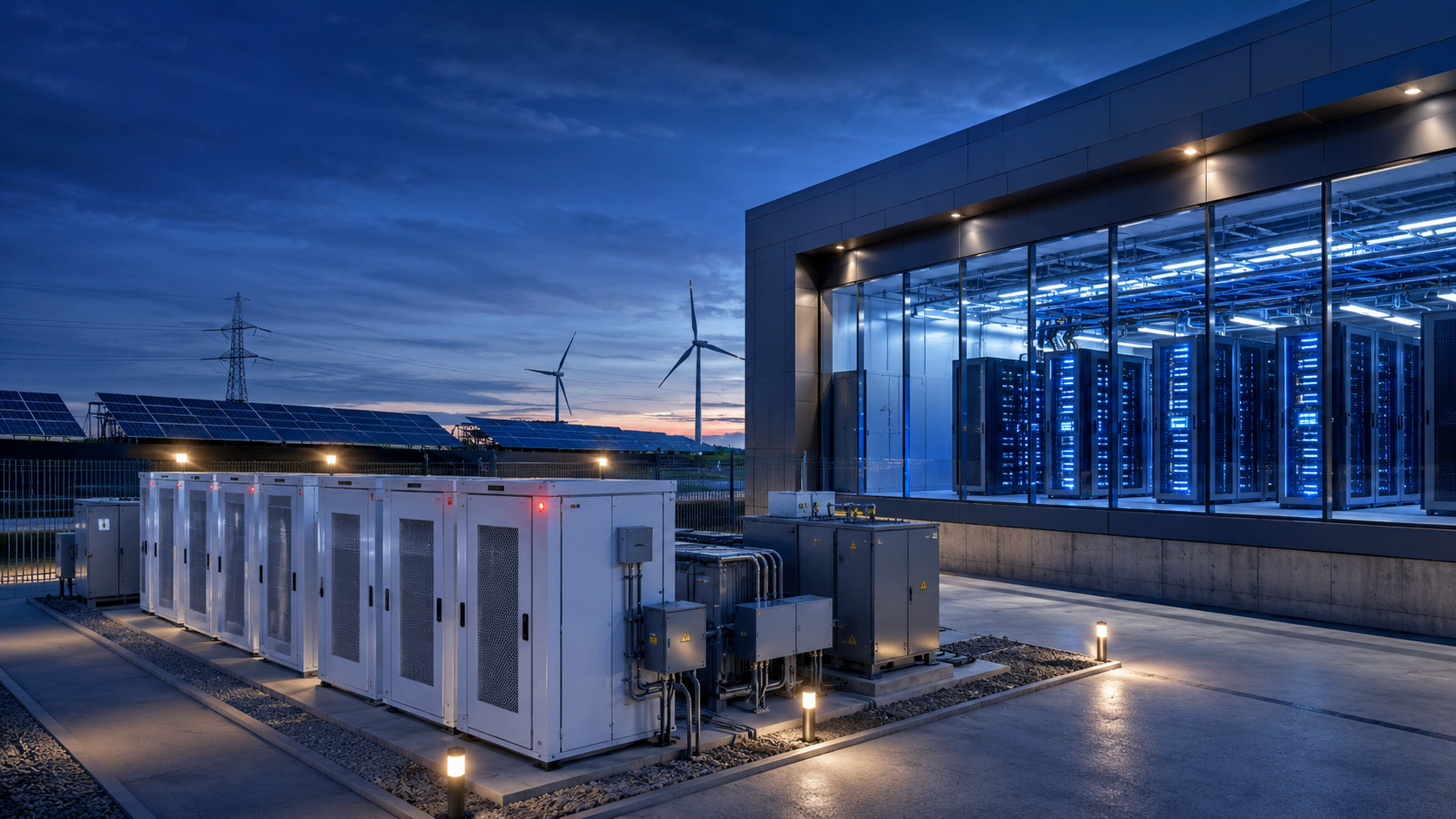
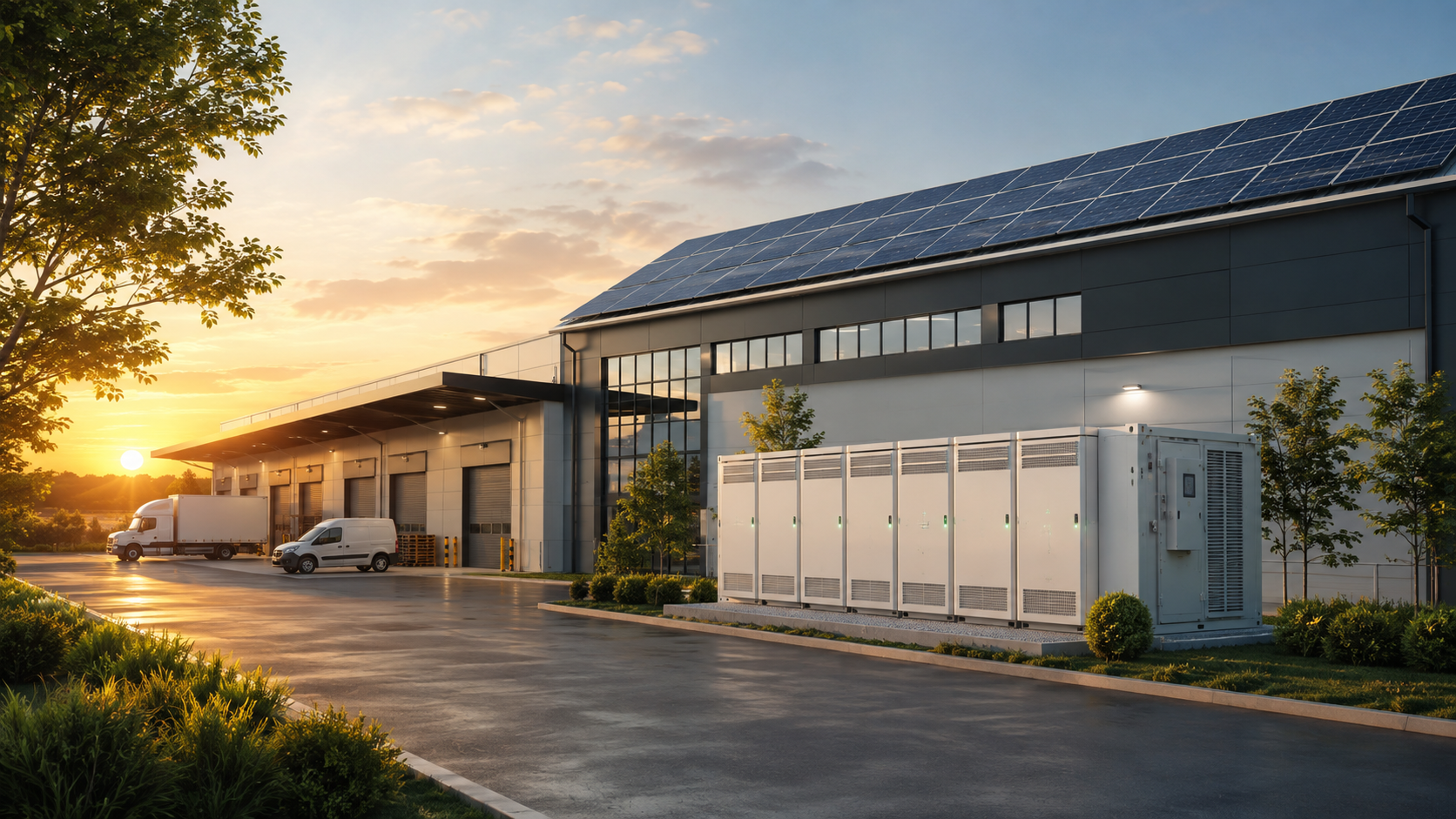
A PV + ESS + diesel generator microgrid solution combines solar generation, battery energy storage and diesel backup into one coordinated power system for remote factories, mining sites, agricultural processing bases, islands, construction camps, telecom sites and weak-grid commercial facilities.
Executive Summary
A PV + ESS + diesel generator microgrid helps remote and weak-grid sites combine solar power, battery storage and diesel backup into one coordinated energy system.
For project owners, the value is not only battery capacity. The value is lower diesel generator dependence, fewer power interruptions, better solar utilization and a more controllable power structure for critical loads.
FLYFINE supports hybrid microgrid projects with LFP battery containers, PCS, EMS, STS, liquid cooling, fire protection, technical documentation and OEM/ODM customization.
Reduce Diesel Runtime
Solar PV and ESS can reduce unnecessary generator operation and lower fuel logistics pressure.
Protect Critical Loads
ESS and STS / ATS help support essential loads during grid instability, switching or outage conditions.
Improve Solar Utilization
Battery storage captures excess PV generation and shifts it to high-demand or low-solar periods.
ROI note: Actual payback should be calculated based on local diesel fuel cost, electricity tariff, PV generation, load profile, generator operating hours, battery size and project operation strategy.
Real Project Reference: 750kW / 1.446MWh Hybrid ESS
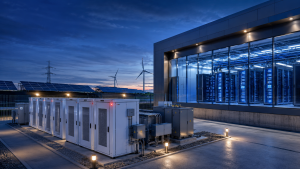
A strong hybrid microgrid solution should be supported by real project experience. FLYFINE’s 750kW / 1.446MWh PV + ESS + diesel generator microgrid project provides a practical reference for commercial and industrial hybrid energy storage design.
This project integrates PV, LFP battery storage, diesel generator backup, PCS, STS, MPPT and EMS into one hybrid energy system. It is designed for weak-grid, off-grid and backup power applications.
| Item | Project Specification |
|---|---|
| Project type | PV + ESS + diesel generator hybrid microgrid |
| Rated power | 750kW |
| Battery capacity | 1.446MWh |
| Battery type | LFP battery |
| Cooling method | Liquid cooling |
| Battery structure | 6 battery clusters |
| Cluster capacity | 241.152kWh each |
| DC voltage range | 648V–876V |
| PCS configuration | 2 × 375kW PCS cabinets |
| Switching system | 750kW STS cabinet |
| Operation mode | Grid-tied and off-grid operation |
The system uses six LFP battery clusters. Each cluster is 768V / 314Ah / 241.152kWh, and the total system energy reaches 1446.912kWh. The container is divided into a battery compartment and an electrical compartment, helping improve layout clarity, maintenance convenience and system integration.
View the full 750kW / 1.446MWh PV + ESS + Diesel Generator Microgrid case
Why Remote and Weak-Grid Sites Need Hybrid Microgrids
Remote and weak-grid sites often operate under conditions that are difficult for standard grid-connected power systems.
| Site Challenge | Common Result | Hybrid Microgrid Value |
|---|---|---|
| Unstable grid supply | Equipment shutdown, production interruption or voltage fluctuation | ESS and STS support smoother transition and backup operation |
| High diesel dependence | High fuel cost, maintenance burden and logistics pressure | PV and ESS reduce unnecessary diesel generator runtime |
| Intermittent solar output | PV cannot support loads continuously | Battery storage shifts solar energy and smooths PV fluctuations |
| High load fluctuation | Motors, pumps, compressors or industrial loads create power spikes | ESS buffers sudden load changes and improves system stability |
| Remote location | Fuel delivery and maintenance are expensive | Solar + battery storage reduces operating pressure |
| Critical loads | Outages may affect safety, production, refrigeration or communication | ESS supports selected critical loads during abnormal conditions |
A well-designed hybrid microgrid does not simply add PV, batteries and diesel generators together. It coordinates each power source according to load demand, solar generation, battery SOC, grid condition and diesel generator status.
How PV, ESS and Diesel Generator Work Together
Solar PV
Solar PV provides daytime energy. When PV generation is higher than site demand, excess solar energy can charge the battery.
Battery Energy Storage System
The ESS stores solar energy, supports load fluctuations, stabilizes PV output and provides backup power for selected critical loads.
Diesel Generator
The diesel generator acts as a backup source when PV output is low, battery SOC is insufficient or the grid is unavailable for a long period.
EMS + STS / ATS
The EMS coordinates PV, battery, generator, grid and load operation, while STS / ATS supports grid-tied and off-grid switching.
System Topology: PV + ESS + Diesel Generator Microgrid
The system topology should clearly show how PV, battery storage, diesel generator, grid input, PCS, EMS, STS / ATS and critical loads are coordinated. The diagram below can be replaced with a custom SVG or designer-rendered topology image during final page design.
Core Operating Logic of a Hybrid Microgrid
A PV + ESS + diesel generator system can operate in multiple modes depending on site conditions.
| Operating Condition | System Behavior |
|---|---|
| Normal daytime operation | PV supplies loads and charges battery when excess generation is available. |
| Peak load period | ESS discharges to reduce grid pressure or diesel generator load. |
| Low solar generation | Battery supports loads if SOC is sufficient. |
| Long outage or low SOC | Diesel generator starts to support loads and/or charge the battery. |
| Grid abnormal condition | STS / ATS supports switching to off-grid operation. |
| Grid recovery | EMS coordinates reconnection and returns to normal operation. |
| Anti-backflow requirement | EMS limits export to grid or generator according to project settings. |
For weak-grid and off-grid projects, this control logic is often more important than battery capacity alone. If the EMS, PCS, STS and generator control are not correctly matched, the system may not perform reliably under real operating conditions.
How ESS Helps Reduce Diesel Generator Runtime
Diesel generators are reliable, but they are not always efficient when running under low or unstable load conditions. In many remote projects, diesel generators may run for long hours even when load demand is not high.
The ESS can absorb excess PV energy, support short-term load spikes and reduce the need for generator operation during low-load periods. When the diesel generator does operate, it can run closer to an efficient load range and charge the battery at the same time, depending on system design.
| Without ESS | With PV + ESS + Diesel Microgrid |
|---|---|
| Diesel generator runs longer to cover variable loads. | Battery handles short load fluctuations. |
| PV energy may be wasted when load is low. | ESS stores excess solar power. |
| Generator may operate inefficiently at low load. | EMS can coordinate generator runtime more efficiently. |
| Outages depend heavily on diesel availability. | Battery provides fast support before generator starts. |
| Higher fuel logistics pressure. | Solar and battery reduce generator dependence. |
The actual fuel savings depend on load profile, PV capacity, diesel generator size, battery capacity and EMS strategy. Project design should be based on real operating data rather than a fixed template.
Liquid Cooling and Thermal Design for High-Capacity ESS
For large C&I energy storage systems, thermal management is critical. Battery temperature affects system efficiency, battery aging, safety and long-term performance.
In FLYFINE’s 750kW / 1.446MWh hybrid microgrid project, liquid cooling is used for the high-capacity battery container.
| Thermal Design Item | Project Reference |
|---|---|
| Cooling method | Liquid cooling |
| Calculated cooling demand | 22.68kW |
| Selected cooling capacity | 30kW |
| Heating capacity | 12.5kW |
| Circulation flow | 360L/min |
Liquid cooling helps improve temperature consistency across battery clusters, reduce thermal stress and support stable long-term operation. This is especially important for high-capacity C&I ESS projects, harsh environments and applications with frequent charge/discharge cycles.
Visual suggestion: Add a container internal image, battery cluster rendering or liquid cooling pipeline diagram in this section to strengthen real project experience.
Safety Design for Containerized BESS
Safety design is essential for hybrid microgrid projects because the system combines high-voltage battery storage, AC/DC conversion, grid connection and diesel generator backup.
| Safety Layer | Purpose |
|---|---|
| BMS monitoring | Tracks cell voltage, current, temperature, SOC and fault status. |
| High-voltage protection | Helps protect the system during abnormal electrical conditions. |
| Insulation monitoring | Detects insulation abnormality in high-voltage circuits. |
| Smoke detection | Provides early warning for abnormal conditions. |
| Temperature detection | Monitors battery and compartment temperature. |
| Combustible gas detection | Supports early detection of abnormal gas accumulation. |
| Ventilation system | Helps manage air exchange and abnormal gas conditions. |
| Fire suppression | Supports emergency response inside the container. |
| Emergency stop | Allows rapid system shutdown when required. |
| Remote monitoring | Helps operators track alarms and system status. |
FLYFINE’s 750kW / 1.446MWh hybrid ESS project includes layered safety design, fire protection and monitoring logic suitable for containerized industrial energy storage applications.
Where PV + ESS + Diesel Generator Microgrids Are Suitable
| Application | Why It Fits |
|---|---|
| Weak-grid factories | Stabilizes production power and reduces downtime risk. |
| Remote industrial sites | Reduces diesel-only dependence and improves energy flexibility. |
| Mining camps | Supports off-grid loads with solar, battery and diesel backup. |
| Agricultural processing bases | Supports motors, pumps, cold storage and processing equipment. |
| Island microgrids | Combines solar power, battery storage and backup generation. |
| Telecom sites | Supports continuous operation for critical communication equipment. |
| Commercial parks | Supports backup power, peak shaving and flexible energy management. |
| Emergency facilities | Provides backup support for essential power demand. |
FLYFINE Hybrid Microgrid Solution Matrix
| Project Scale | Recommended Solution Direction | Typical Use |
|---|---|---|
| Small commercial site | 64kWh small C&I ESS cabinet | Farms, shops, workshops, small factories |
| Medium C&I project | Outdoor air-cooled C&I ESS cabinet | Peak shaving, backup, solar storage |
| Large industrial site | Liquid-cooled ESS cabinet or containerized BESS | Factories, industrial parks, weak-grid sites |
| Remote microgrid | PV + ESS + diesel generator system | Mining, island, construction, agricultural bases |
| OEM/ODM partner project | Customized battery / ESS configuration | Private-label ESS, local market distribution |
FLYFINE’s C&I ESS solutions can support applications such as solar storage, backup power, peak shaving, solar-storage-diesel hybrid projects and commercial microgrid projects.
Technical Parameters Buyers Should Confirm
Before selecting a PV + ESS + diesel generator microgrid solution, project developers should confirm more than battery capacity.
| Parameter | Why It Matters |
|---|---|
| Load profile | Determines system power rating and discharge strategy. |
| Critical load list | Defines backup priority and required switching performance. |
| Daily energy consumption | Helps estimate total battery capacity. |
| Peak load | Determines PCS and battery discharge power. |
| PV capacity | Affects solar contribution and battery charging strategy. |
| Diesel generator rating | Affects backup sizing and generator control logic. |
| Grid condition | Determines grid-tied/off-grid requirements. |
| Required backup time | Determines battery capacity and generator coordination. |
| Switching requirement | Affects STS / ATS and critical load protection. |
| Installation environment | Determines container, cabinet, cooling and IP requirements. |
| Communication protocol | Affects EMS, BMS, PCS and generator integration. |
| Expansion plan | Helps define modular system architecture. |
7-Step Engineering Flow for PV + ESS + Diesel Microgrid Projects
- Site Power Assessment: Review load profile, daily consumption, peak demand, critical loads, grid availability and outage patterns.
- PV Resource and Capacity Review: Evaluate solar PV capacity, generation curve, available installation area and expected solar contribution.
- Diesel Generator Matching: Confirm generator rating, fuel strategy, start/stop logic and backup operation requirement.
- Battery Capacity and Power Design: Calculate battery energy capacity in kWh and discharge power in kW according to peak load, backup time and PV shifting target.
- PCS, STS and EMS Configuration: Define power conversion, fast switching, source priority, anti-backflow logic and grid-tied/off-grid strategy.
- Thermal and Safety Design: Select air cooling or liquid cooling, fire protection, ventilation, emergency shutdown and container layout according to project scale.
- Technical Proposal and Delivery Plan: Prepare system architecture, datasheet, quotation, layout, communication plan, packaging and delivery schedule.
OEM/ODM Customization for Hybrid Microgrid Projects
A PV + ESS + diesel generator project is rarely a standard product purchase. Every site has different load profiles, PV capacity, diesel generator size, grid conditions, installation space, backup time requirements and local standards.
FLYFINE supports OEM/ODM custom energy storage solutions for distributors, EPC contractors, system integrators and project developers.
- Battery capacity and system voltage
- Rack, cabinet or containerized BESS design
- Air-cooled or liquid-cooled thermal management
- PCS, STS, MPPT, transformer and diesel generator matching
- Grid-tied, off-grid or hybrid microgrid operation
- EMS strategy for peak shaving and backup power
- Fire protection, gas detection, ventilation and emergency shutdown
- Cabinet layout, branding and delivery configuration
- Technical datasheets and project documentation
FLYFINE Engineering and Quality Control Support
Hybrid microgrid systems require careful integration because PV, battery storage, grid input and diesel generator backup must work together safely.
| Project Stage | FLYFINE Support |
|---|---|
| Requirement analysis | Review load, PV, generator, grid and backup needs. |
| System configuration | Match battery capacity, PCS, STS, EMS and cooling design. |
| Electrical integration | Support BMS, PCS, EMS and generator communication logic. |
| Safety review | Consider thermal management, fire protection and emergency shutdown. |
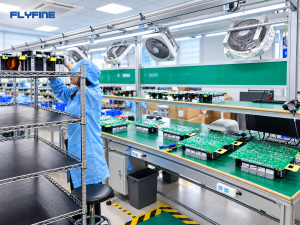
| Production control | Inspect cells, BMS, wiring, cabinet structure and system assembly. |
| Functional testing | Check charge/discharge, communication, alarms and protection logic. |
| Packaging | Use suitable heavy-duty packaging for lithium battery transportation. |
| Delivery support | Coordinate shipping documents, delivery schedule and export communication. |
For B2B buyers, this engineering and quality control process helps reduce project risk and improves confidence in long-term operation.
Advanced Technical FAQs
How does the EMS prevent reverse power flow to the diesel generator?
The EMS can be configured with anti-backflow logic based on load demand, battery SOC, generator status and PCS output. In hybrid microgrid projects, reverse power protection is important because diesel generators are not designed to absorb excess power. The control strategy should be confirmed according to generator model, load profile and site operating mode.
How do you size the battery and PCS for a PV + ESS + diesel generator system?
Battery capacity should be sized according to daily energy demand, PV generation curve, backup time and generator optimization target. PCS power should match peak load, critical load demand and expected battery discharge power. For accurate sizing, FLYFINE recommends providing load curve data, PV capacity, generator rating and required backup duration.
Can the system switch between grid-tied and off-grid operation?
Yes. A properly configured hybrid microgrid can support grid-tied and off-grid operation through PCS, EMS and STS / ATS coordination. Switching requirements should be confirmed according to critical load sensitivity, PCS configuration and site operation mode.
What happens when solar PV output drops suddenly?
When PV output drops, the EMS can adjust battery discharge, grid intake or diesel generator operation according to the configured source priority. The goal is to maintain stable power supply while protecting battery SOC and critical loads.
Why is liquid cooling used in large containerized ESS projects?
Liquid cooling helps improve temperature consistency across battery clusters, reduce thermal stress and support stable long-term operation. It is especially useful for high-capacity containerized BESS projects, frequent cycling and high-temperature operating environments.
Can ESS reduce diesel generator fuel consumption?
Yes, but the actual reduction depends on PV capacity, load profile, generator size, battery capacity and EMS strategy. ESS can store solar energy, buffer short load spikes and reduce unnecessary generator runtime during low-load or intermittent-load conditions.
What safety protections should a containerized BESS include?
A containerized BESS should include BMS monitoring, high-voltage protection, insulation monitoring, smoke detection, temperature detection, combustible gas detection, ventilation, fire suppression, emergency stop and electrical isolation.
Can the system work with existing diesel generators?
In many projects, yes. However, the diesel generator rating, controller interface, operating mode, start/stop logic and protection requirements must be checked before integration. FLYFINE can help review generator matching requirements for hybrid ESS projects.
What data should we provide before requesting a quotation?
Please provide project location, load curve, peak load, daily energy consumption, PV capacity, diesel generator rating, grid condition, critical load list, required backup time, installation environment and communication requirements.
Can FLYFINE customize the system for EPC or distributor projects?
Yes. FLYFINE supports OEM/ODM customization for C&I ESS and hybrid microgrid projects, including battery capacity, voltage platform, container layout, PCS, STS, EMS, cooling method, fire protection, branding and project documentation.
Request a Hybrid Microgrid Configuration
A PV + ESS + diesel generator microgrid can help remote and weak-grid sites reduce diesel dependence, improve backup power reliability and make better use of solar energy.
Send FLYFINE your project information, and our team can help evaluate a suitable PV + ESS + diesel generator system architecture for your site.
Recommended Project Information
- Project location
- Application type
- Peak load
- Daily energy consumption
- Existing or planned PV capacity
- Diesel generator rating
- Required backup time
- Grid condition
- Installation environment
- Project stage
- OEM/ODM requirements