

Choosing a reliable inverter manufacturer is not only about comparing power rating, conversion efficiency, battery compatibility, communication protocol, protection functions, and price. For distributors, installers, EPC companies, and energy storage project developers, the real value of an inverter supplier is often reflected in the manufacturing process behind the product.
A solar inverter or hybrid inverter may look similar from the outside, but the internal PCB assembly, wiring layout, heat dissipation design, production control, and quality inspection process can make a major difference in long-term performance.
This article explains how buyers can evaluate an inverter manufacturer before cooperation, especially when looking for a long-term inverter supplier, solar inverter manufacturer, hybrid inverter manufacturer, or OEM/ODM inverter manufacturing partner.
Why Choosing the Right Inverter Manufacturer Matters
An inverter is one of the key components in a solar energy system or energy storage system. It converts power, manages system operation, communicates with batteries, and helps maintain stable power output under different working conditions.
If the inverter manufacturing process is not well controlled, problems may appear after installation. These may include unstable operation, overheating, communication failure, loose internal connections, abnormal shutdowns, or higher after-sales pressure.
For B2B buyers, choosing the right inverter manufacturer can help reduce project risk, improve delivery stability, and support long-term business development. This is especially important for companies that purchase inverters for resale, installation, project deployment, or OEM/ODM cooperation.
Check the Inverter PCB Assembly Process
The PCB is one of the most important parts inside an inverter. It supports power conversion, system control, signal communication, protection functions, and overall operating stability.
When evaluating a solar inverter manufacturer or hybrid inverter manufacturer, buyers should pay attention to the inverter PCB assembly process. PCB boards should be handled in a clean, organized, and controlled production environment before they move to the next assembly stage.
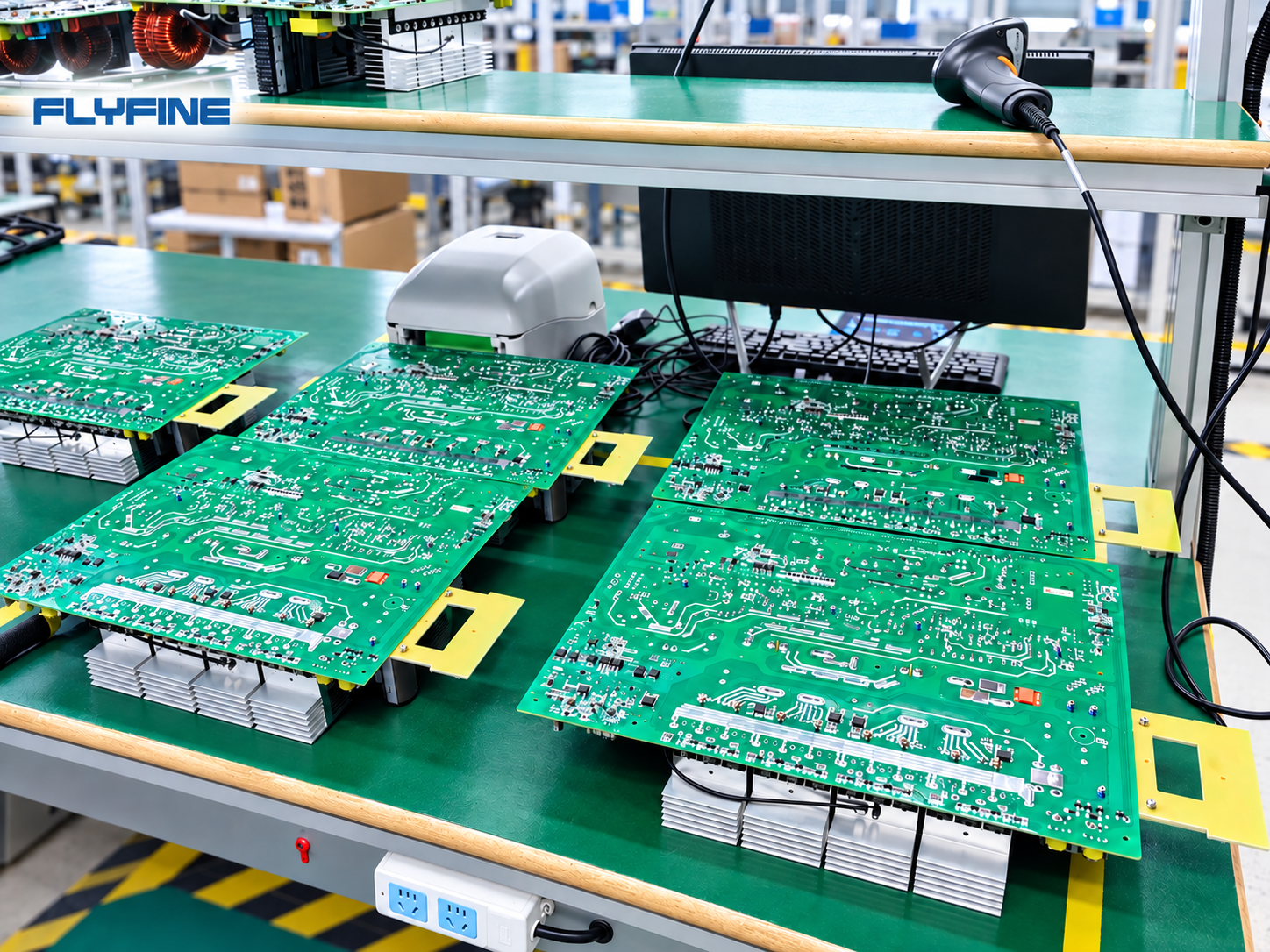
Inverter PCB assembly and inspection are important steps before final product integration.
A reliable inverter PCB assembly process can help improve:
- Power conversion stability
- Communication between inverter and battery
- Protection response performance
- Electrical safety
- Long-term product consistency
Buyers should ask whether the inverter supplier has a real PCB assembly and inspection process. If the supplier cannot clearly explain how PCB boards are handled, inspected, and integrated, it may be difficult to judge the real manufacturing quality behind the product.
Evaluate the Inverter Manufacturing Process
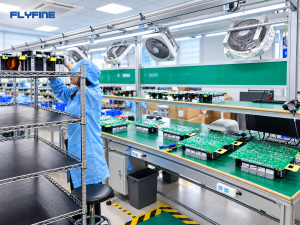
A professional inverter manufacturing process is not simply about putting components into a housing. It includes PCB preparation, component installation, wiring, heat dissipation structure, housing assembly, inspection, and testing before shipment.
During production, semi-finished components such as inverter housings, PCB assemblies, wiring harnesses, connectors, display panels, and structural parts should be managed clearly. Organized production racks and clean work areas can help improve batch consistency and reduce assembly errors.
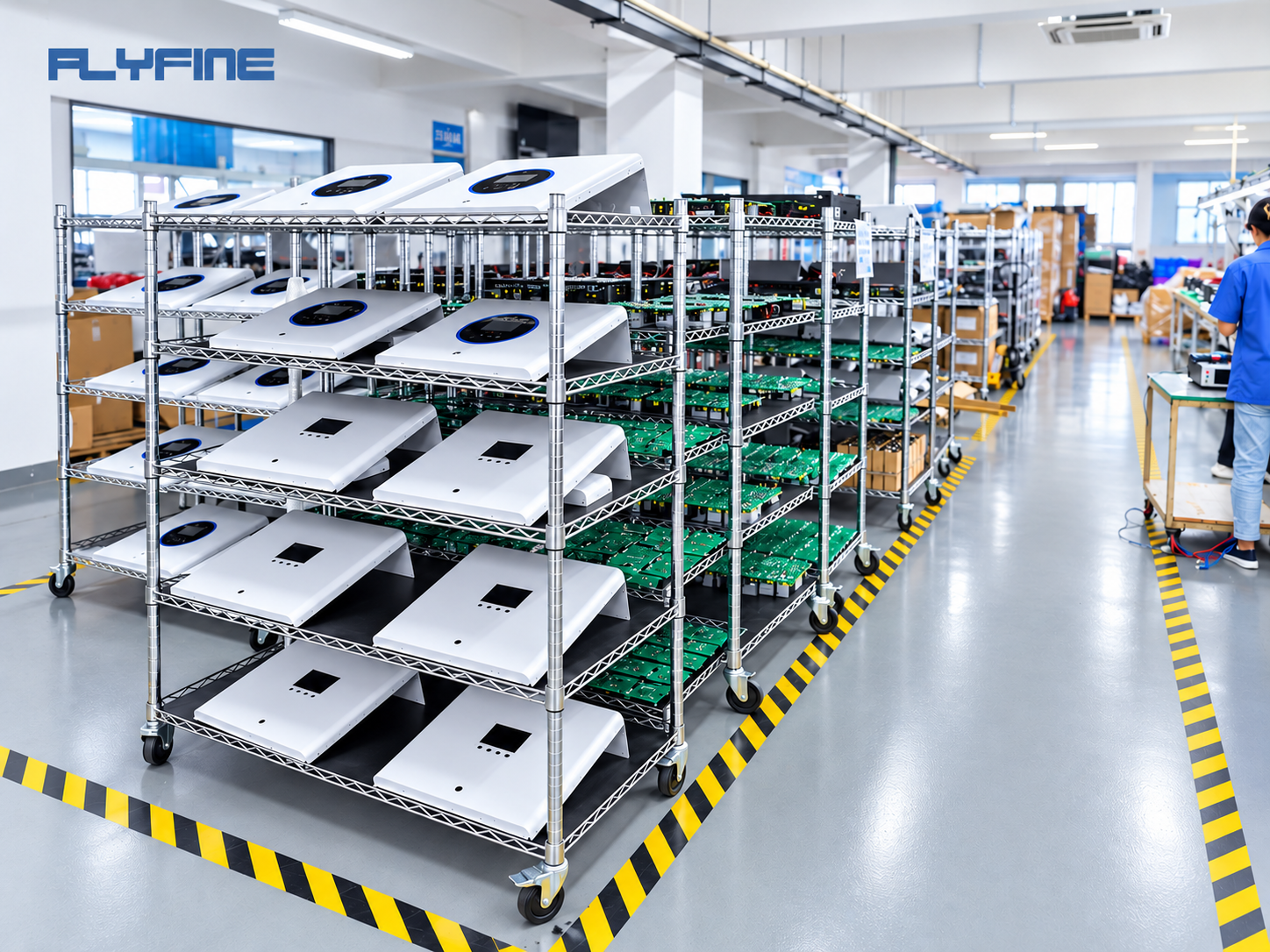
Organized semi-finished inverter housings and PCB boards help improve production consistency.
When visiting a factory or reviewing production photos, buyers can check whether the inverter manufacturer has:
- Organized production workstations
- Clear material management for semi-finished products
- Dedicated areas for PCB assembly and product assembly
- Professional tools and production racks
- Visible control of different production stages
This kind of production organization is important for distributors and EPC companies because it reflects whether the supplier can support stable delivery and repeated orders.
Look at Solar Inverter Quality Control Before Shipment
Inverter quality control should not rely only on visual inspection. Before shipment, a reliable inverter manufacturer should conduct necessary checks to confirm product function, safety, communication, and operating stability.
For solar inverters, hybrid inverters, and energy storage inverters, quality control may include:
- Appearance inspection
- PCB and wiring inspection
- Power-on testing
- Communication function checking
- Protection function verification
- System compatibility testing
Solar inverter quality control is directly related to after-sales risk. For installers and distributors, a product that has not been properly tested may lead to installation problems, customer complaints, and additional maintenance costs.
Before choosing an inverter supplier, buyers should ask how the supplier checks products before delivery and whether the inspection process is suitable for their target applications.
Check Heat Dissipation and Internal Wiring Design
Heat dissipation is a key factor in inverter reliability. Inverters often work under continuous load, especially in solar power systems and energy storage applications. Poor thermal management can reduce efficiency, shorten component lifespan, and increase failure risk.
When evaluating an inverter manufacturer, buyers should check whether the product structure supports effective heat dissipation. This includes heat sink design, air channel design, component placement, and housing structure.
Internal wiring is another important detail. Poor wiring layout can create unnecessary stress, signal interference, or loose connections after transportation and installation.
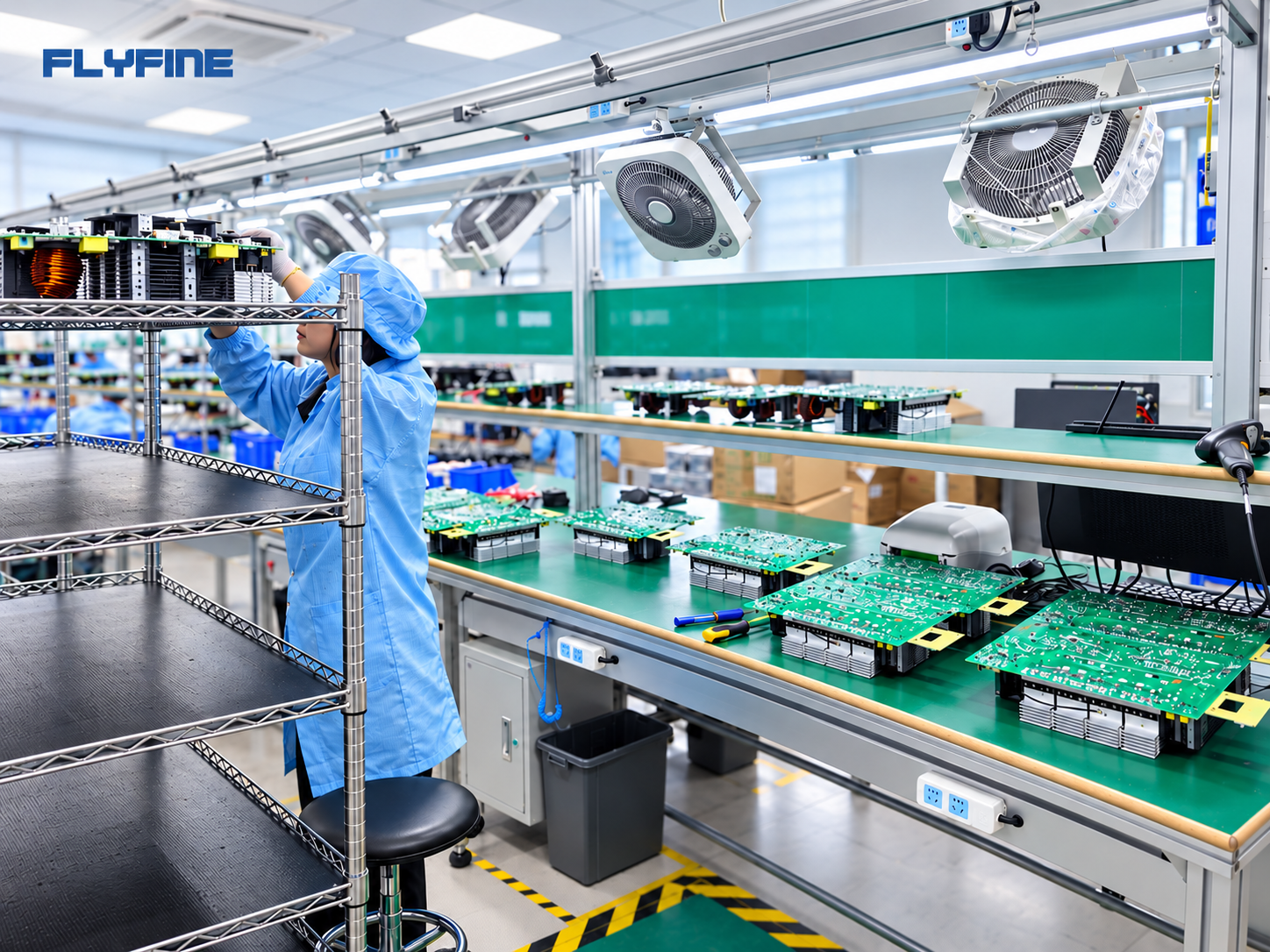
Technician assembly work shows how internal components are handled during inverter production.
A reliable inverter supplier should pay attention to:
- Neat cable routing
- Secure connectors
- Reasonable internal spacing
- Stable heat dissipation structure
- Protection of key electronic components
These details are not always visible in a product catalog, but they can directly affect inverter performance in real projects.
Ask About OEM and ODM Inverter Manufacturing Support
Many B2B buyers are not only looking for standard inverter products. They may also need OEM inverter manufacturing or ODM inverter manufacturing support for their own brands and local markets.
For distributors, energy storage brands, and project companies, OEM/ODM support may include customized appearance, logo, packaging, communication configuration, product labeling, system matching, and market-specific requirements.
When choosing an OEM ODM inverter manufacturer, buyers should ask:
- Can the supplier support customized appearance and labeling?
- Can the supplier match inverters with battery storage systems?
- Can the supplier provide technical documents for local partners?
- Can the supplier support repeated orders with consistent quality?
- Can the supplier provide stable communication during product development?
A supplier with real inverter manufacturing capability is usually better positioned to support long-term OEM/ODM cooperation than a trading company that only resells finished products.
Inverter Supplier Checklist for Distributors, Installers, and EPC Companies
Before choosing an inverter supplier, buyers can use the following checklist to evaluate whether the supplier is suitable for long-term cooperation:
- Does the supplier have real inverter production capability?
- Does the factory have a clear inverter PCB assembly process?
- Are semi-finished products organized and protected during production?
- Is the assembly environment suitable for electronics manufacturing?
- Does the inverter design consider heat dissipation?
- Is the internal wiring layout neat and secure?
- Does the supplier perform inverter quality control before shipment?
- Can the supplier support solar inverter and hybrid inverter applications?
- Can the supplier provide OEM/ODM inverter manufacturing support?
- Is the supplier suitable for repeated orders and long-term cooperation?
This checklist can help buyers look beyond product specifications and better understand the real capability of an inverter manufacturer.
Conclusion: Choose an Inverter Manufacturer with Real Production Capability
Choosing a reliable inverter manufacturer requires more than checking datasheets and prices. Buyers should also evaluate the inverter PCB assembly process, manufacturing environment, internal wiring, heat dissipation design, quality control, and OEM/ODM support.
For distributors, installers, EPC companies, and energy storage project partners, working with a supplier that has visible production capability can help reduce after-sales pressure, improve project stability, and support long-term business growth.
FLYFINE provides solar inverter, hybrid inverter, lithium battery, and energy storage solutions for residential, commercial, and project-based applications. With inverter manufacturing support, battery storage system integration, and flexible OEM/ODM cooperation, FLYFINE helps global partners build reliable solar and energy storage solutions.
Looking for a Reliable Inverter Manufacturer?
FLYFINE supports global partners with solar inverter solutions, hybrid inverter solutions, lithium battery systems, energy storage systems, and OEM/ODM cooperation.
Contact FLYFINE