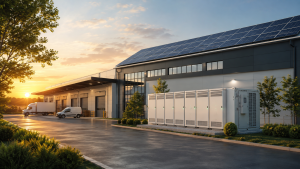
750kW / 1.446MWh PV + ESS + Diesel Generator Microgrid Project Case
A real commercial and industrial hybrid energy storage project designed for weak-grid, off-grid, and backup power applications.
Solar power is clean and cost-effective, but it cannot provide stable output all day. Diesel generators are reliable, but long-term operation means higher fuel cost, noise, maintenance, and emissions. In weak-grid or off-grid areas, relying on only one power source is often not enough.
That is why many commercial and industrial projects are moving toward hybrid energy systems that combine PV, battery energy storage, diesel generator backup, grid connection, and EMS control.
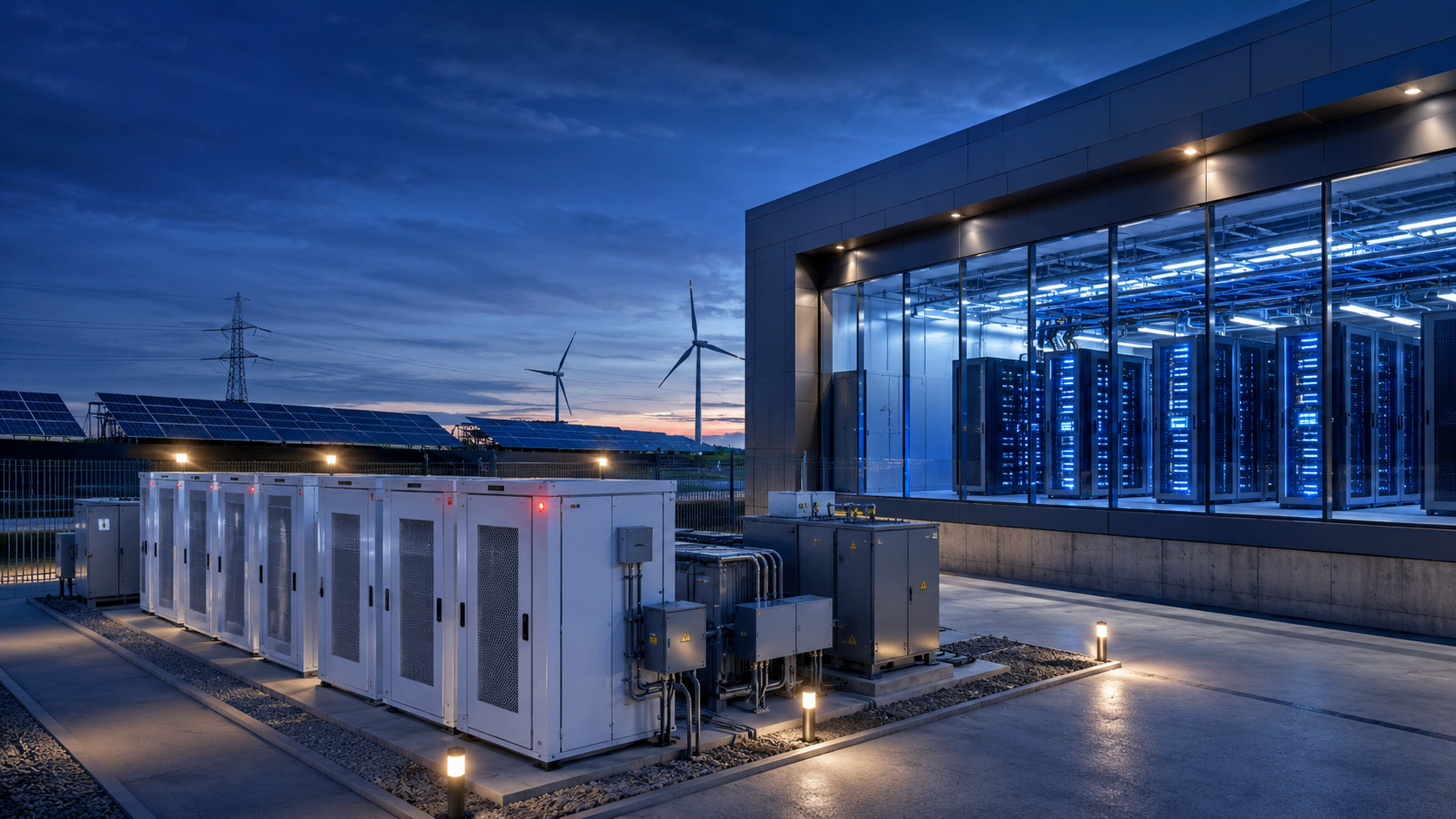
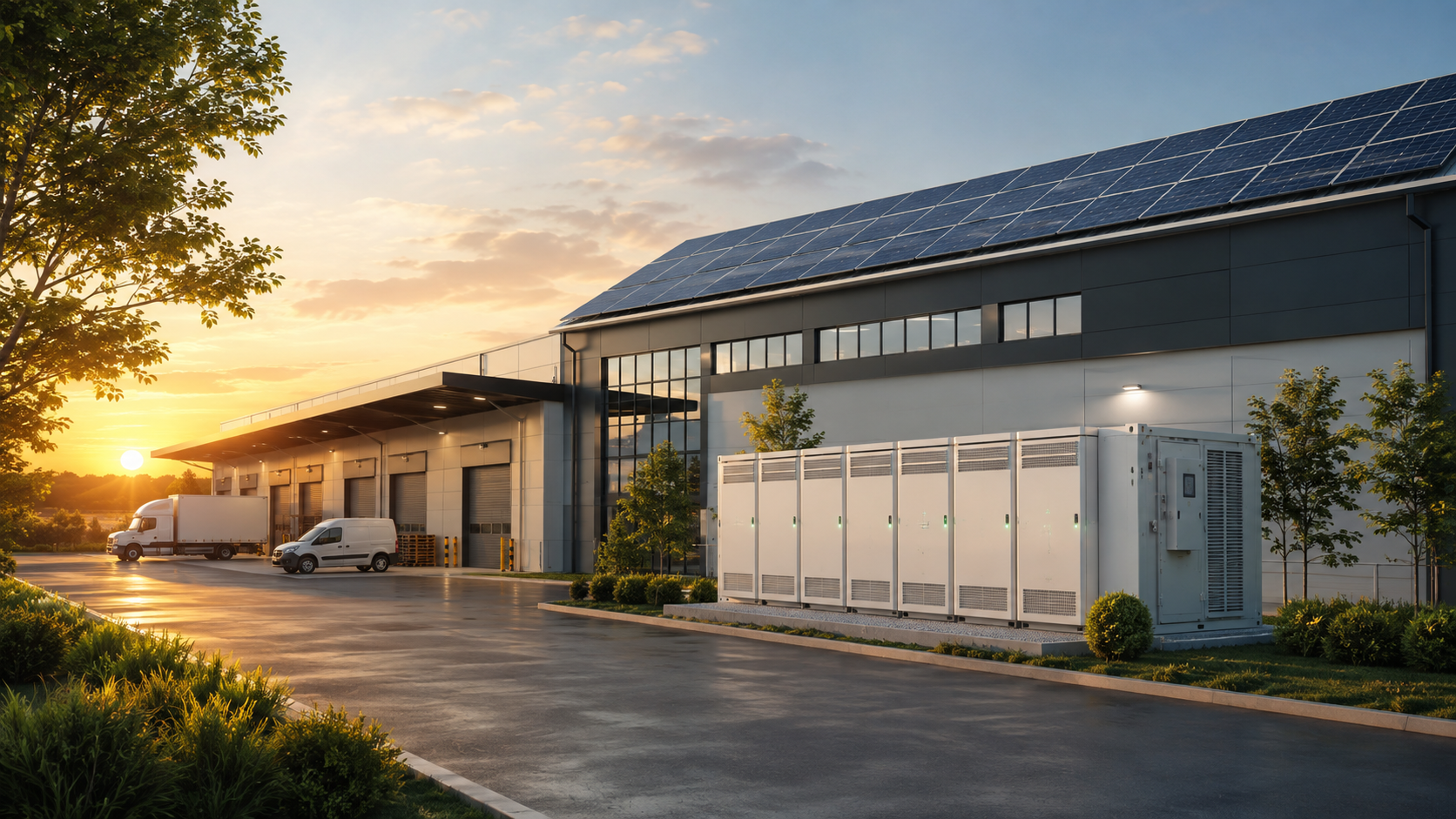
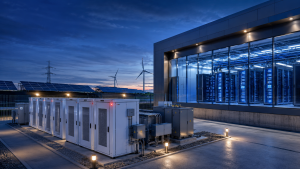
This project is a 750kW / 1.446MWh PV + ESS + diesel generator grid-tied and off-grid energy storage system. It is designed for sites that need reliable power, fast switching, lower diesel generator runtime, and flexible operation under different power conditions.
For similar commercial applications, visit FLYFINE’s Commercial & Industrial ESS Solution page.
Project Overview
| Project type | PV + ESS + diesel generator hybrid microgrid |
|---|---|
| Rated power | 750kW |
| Battery capacity | 1.446MWh |
| Battery type | LFP battery |
| Cooling method | Liquid cooling |
| Battery structure | 6 battery clusters |
| Cluster capacity | 241.152kWh each |
| DC voltage range | 648V–876V |
| PCS configuration | 2 × 375kW PCS cabinets |
| Switching system | 750kW STS cabinet |
| Operation mode | Grid-tied and off-grid |
The battery system is built with six LFP battery clusters. Each cluster is 768V / 314Ah / 241.152kWh, and the total system energy reaches 1446.912kWh. The container is divided into a battery compartment and an electrical compartment, improving safety, layout clarity, and maintenance convenience.
Why Use PV + ESS + Diesel Generator Together?
A PV + ESS + diesel generator system is not just about adding more equipment. Each power source has a clear role.
Solar PV
Provides clean daytime energy and reduces fuel or grid electricity consumption.
Battery ESS
Stores energy, stabilizes load fluctuations, and supports backup power.
Diesel Generator
Provides backup power during long outages, low solar generation, or low battery SOC.
EMS Control
Coordinates charging, discharging, source switching, anti-backflow, and protection logic.
In normal conditions, PV can supply loads and charge the battery. During peak demand, the battery discharges to reduce grid pressure. When the grid becomes abnormal, the system can switch to off-grid mode. If PV output and battery SOC are not enough, the diesel generator provides backup power.
How the Hybrid Microgrid Works
The core of this project is the 750kW microgrid energy router. It coordinates PV, battery storage, PCS, STS, diesel generator, grid, EMS, and loads.
PV Generation
Solar PV supplies daytime loads and charges the battery when generation is available.
Battery Storage
ESS stores energy and discharges during peak demand or unstable grid conditions.
Fast Switching
STS supports grid-tied/off-grid switching to protect critical loads.
Backup Support
Diesel generator works as a backup source when PV and battery energy are insufficient.
A key feature is fast switching. The system design supports grid-tied/off-grid switching in less than 10ms, helping emergency loads continue operating when grid or diesel generator supply becomes abnormal.
Why Liquid Cooling Is Used
For a 1.446MWh containerized ESS, thermal management is critical. If battery temperature is not controlled properly, system efficiency, battery life, and safety may be affected.
Liquid cooling helps improve temperature consistency, reduce thermal stress, and support stable long-term operation, especially for high-capacity C&I energy storage projects.
EMS Control: The System’s Brain
The EMS is not just a monitoring screen. It decides how the whole system operates.
EMS Control Goals
- Peak shaving and valley filling
- Preventing reverse power flow
- Avoiding transformer overload
- Tracking load changes in real time
- Coordinating PCS output
- Protecting the system during BMS alarms
Why It Matters
The EMS turns the system from a simple battery container into a smart hybrid microgrid. It helps the battery, PV, grid, and diesel generator work together safely and efficiently.
Safety Design
A containerized ESS project must be designed with layered safety protection. This project includes BMS monitoring, high-voltage protection, insulation monitoring, smoke detection, temperature detection, combustible gas detection, ventilation, fire suppression, emergency stop, and electrical isolation.
BMS Monitoring
Tracks voltage, current, temperature, insulation, and communication status.
Fire Detection
Uses smoke, temperature, and combustible gas detection for early warning.
Fire Suppression
Includes FK-5-1-12 fire suppression, pipelines, nozzles, and alarm linkage.
Electrical Isolation
Supports fast disconnection through relays, fuses, and protection devices.
Why OEM/ODM Capability Matters
A PV + ESS + diesel generator project is rarely a simple standard product purchase. Every site has different load profiles, PV capacity, diesel generator size, grid conditions, installation space, backup time requirements, and local safety standards.
In this 750kW / 1.446MWh project, the system is not just a battery container. It integrates battery clusters, liquid cooling, PCS, MPPT, STS, EMS, fire protection, grid-tied/off-grid switching, and diesel generator access into one complete microgrid solution.
FLYFINE supports OEM/ODM custom energy storage solutions for distributors, EPC contractors, system integrators, and project developers.
Where This System Is Suitable
| Application | Why It Fits |
|---|---|
| Weak-grid factories | Stabilizes production power and reduces downtime risk. |
| Remote industrial sites | Reduces dependence on diesel-only operation. |
| Mining or construction camps | Supports off-grid loads with PV, ESS, and diesel backup. |
| Agricultural processing bases | Provides stable power for motors, cold storage, and processing equipment. |
| Island microgrids | Combines solar, battery storage, and backup generation. |
| Commercial parks | Supports peak shaving, backup power, and flexible energy management. |
FAQ
What is a 750kW / 1.446MWh energy storage system?
−It is a commercial and industrial energy storage system with 750kW rated power and about 1.446MWh battery capacity. This project uses six LFP battery clusters and a 750kW microgrid energy router for grid-tied and off-grid operation.
Why combine PV, ESS, and diesel generator?
+PV reduces fuel and grid energy use, ESS stores energy and stabilizes power, and the diesel generator provides backup when solar generation or battery SOC is insufficient.
Why use liquid cooling?
+Liquid cooling provides better temperature consistency for high-capacity battery systems. It helps improve performance, safety, and long-term battery life.
Can the system switch between grid-tied and off-grid operation?
+Yes. The system includes STS and ATS logic, allowing automatic switching when grid or diesel generator supply becomes abnormal.
Can this system be customized?
+Yes. FLYFINE supports OEM/ODM customization for C&I ESS projects, including battery capacity, PCS and STS matching, EMS strategy, container layout, cooling method, fire protection, and branding options.
Need a Custom PV + ESS + Diesel Generator Solution?
A reliable hybrid microgrid is not only about battery capacity. It requires correct system architecture, source coordination, PCS and STS matching, EMS control logic, thermal management, and safety design.