

Choosing an off-grid inverter is an important step in designing a solar and battery system. For distributors, installers and project buyers, one early decision is whether to use a 24V or 48V battery system.
Both options can support compatible solar and backup power applications. The right choice depends on the inverter’s output rating, the connected loads, battery capabilities, solar array and project requirements.
Quick answer: A 24V off-grid inverter can be suitable for smaller compatible systems, while a 48V system can reduce battery-side current for the same power demand. The final selection should follow the specifications of the inverter, battery and connected equipment.
What Does 24V or 48V Mean on an Off-Grid Inverter?
The 24V or 48V rating normally describes the inverter’s nominal battery system voltage. It does not refer to the AC voltage supplied to appliances or the voltage of the solar array.
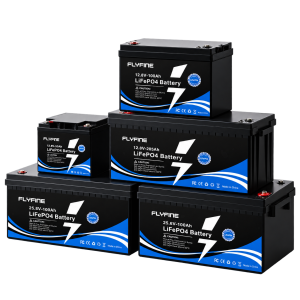
For example, a 24V battery system may use a lithium battery with a nominal voltage of 25.6V, while a 48V-class lithium system may use a 51.2V battery. Nominal voltage alone does not establish compatibility: the battery’s operating and charging voltage range must also match the inverter’s requirements.
A 24V inverter must not be connected directly to a 48V battery system unless the manufacturer specifically identifies that configuration as supported.
24V vs 48V Off-Grid Inverters: Key Differences
| Consideration | 24V System | 48V System |
|---|---|---|
| Nominal battery voltage | 24V class | 48V class |
| Battery-side current | Higher at the same power level | Lower at the same power level |
| Typical project consideration | Smaller compatible loads or existing 24V systems | Projects with higher power demand or existing 48V systems |
| Battery selection | Requires a compatible 24V-class battery | Requires a compatible 48V-class battery |
| System design | Check battery current, cabling and protection | Check battery current, cabling and protection |
Scroll horizontally to view the full table.
These are general comparisons. A higher battery voltage does not automatically mean that an inverter is more powerful, more efficient or suitable for every project.
Why Does Battery Voltage Affect Current?
For a simple comparison, DC power can be estimated using:
Power (W) = Voltage (V) × Current (A)
At an illustrative DC power level of 3,000W:
- 24V system: approximately 125A
- 48V system: approximately 62.5A
This example assumes the same DC power at both nominal voltages. In a real system, battery current varies with operating voltage, load and inverter efficiency. Supplying 3,000W of AC output generally requires more than 3,000W from the battery because conversion losses must also be considered.
The lower current of a 48V system can influence cable sizing and reduce resistive losses for a given cable resistance. However, cable length, voltage drop, ambient temperature, protection devices and installation requirements must all be considered by the system designer.
When Might a 24V Off-Grid Inverter Be Suitable?
A 24V inverter can be considered when the project has moderate power requirements or already uses a compatible 24V battery system. Depending on the model and system design, applications may include:
- Small residential backup systems
- Cabins and remote site power
- Lighting, communication and selected household loads
- Compact solar systems using a compatible 24V battery
The key check is whether the battery and its battery management system can supply the current required by the inverter. A battery with enough stored energy may still be unsuitable if its discharge current limit is too low.
For a practical example, read: Can a 24V 100Ah LiFePO4 Battery Run a 3kW Inverter?
When Might a 48V Off-Grid Inverter Be Suitable?
A 48V system is often considered for projects with higher power demand or where battery-side current is an important design consideration. Depending on the selected equipment, these applications may include:
- Residential solar and backup power systems
- Properties with several simultaneous electrical loads
- Remote sites with larger energy requirements
- Projects already designed around a compatible 48V battery system
A 48V system still requires careful battery selection. Installers should check the operating voltage range, continuous and peak discharge limits, BMS settings, charging requirements and communication compatibility.
How to Select the Right Inverter for Your Project
1. Identify the Loads
List the appliances or equipment that need power and calculate their expected simultaneous demand. Check both continuous operating power and starting requirements, especially for pumps, compressors and other motor-driven loads.
Compare these requirements with the inverter’s continuous output and its specified surge or overload capability. Starting performance depends on both the inverter and the connected battery system.
2. Check Battery Compatibility
Confirm the battery’s voltage range, chemistry, charging profile and current limits against the inverter specifications. If communication between the battery BMS and inverter is required, confirm the supported protocol and model compatibility before ordering.
A CAN or RS485 port by itself does not guarantee that two products will communicate correctly.
3. Review the Solar Array Requirements
Check the inverter’s maximum PV input voltage, MPPT operating range, input current and permitted PV power. The solar array must be designed for the selected model, including its expected open-circuit voltage at the lowest relevant site temperature.
Battery voltage and PV input voltage are separate specifications. Two 24V inverters may have very different solar input limits.
4. Confirm AC Input and Installation Requirements
If the system uses a generator or utility supply as a charging source, check the inverter’s supported AC input range and operating modes. Confirm the required output voltage and frequency, installation location, environmental protection and local electrical requirements.
5. Plan for Future Expansion
If additional loads or battery capacity are expected, discuss expansion requirements early. Parallel operation, battery expansion and additional solar capacity depend on the exact inverter and battery models.
Explore FLYFINE Off-Grid Inverter Options
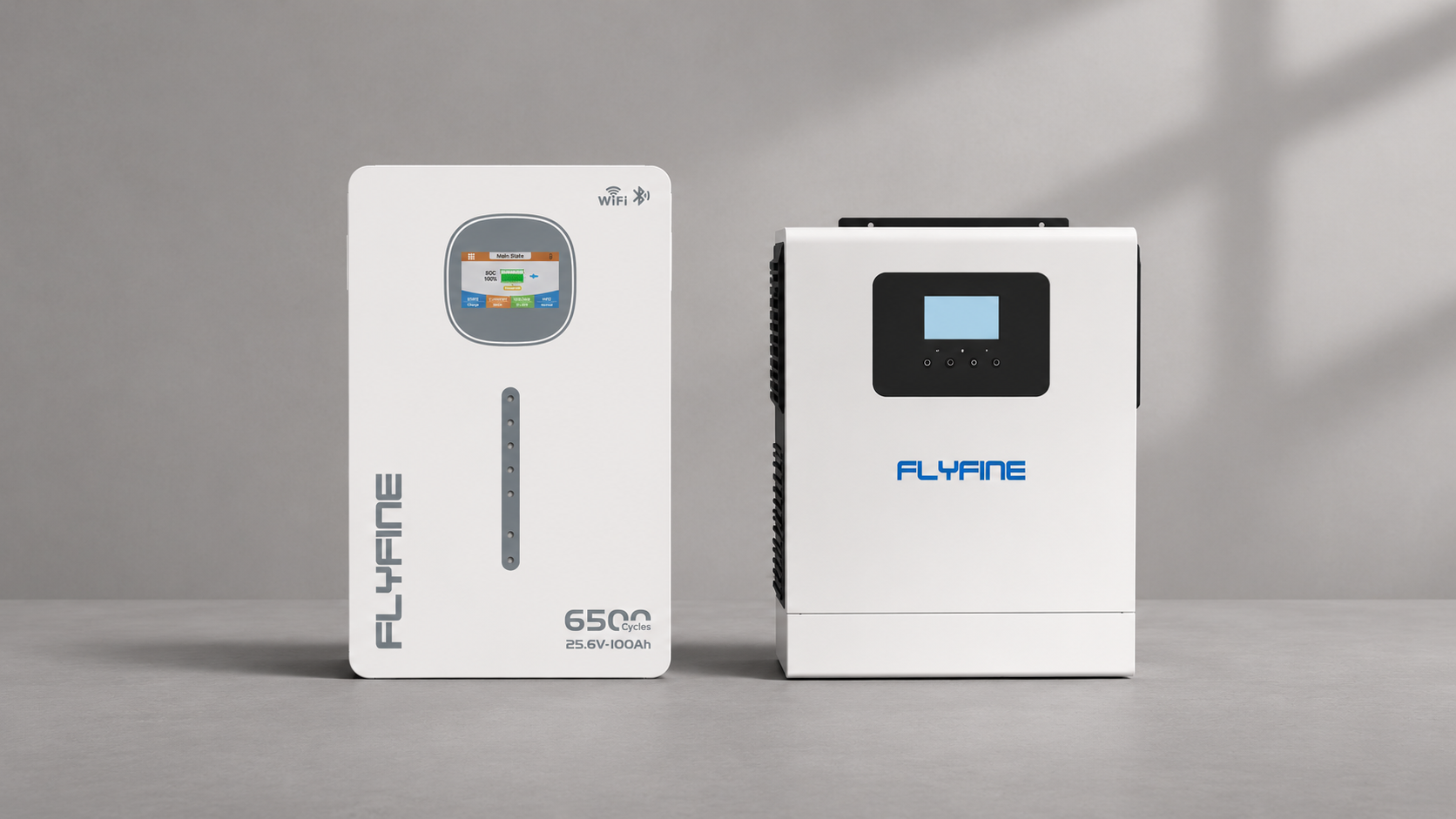
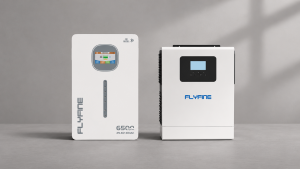
FLYFINE offers off-grid inverter options for different compatible battery systems and project requirements. Product specifications and supported functions vary by model.
24V Off-Grid Inverter
The FLYFINE 3kW and 3.5kW models combine inverter output, solar charging and AC charging functions for compatible 24V battery systems.
48V Off-Grid Inverter
Explore the FLYFINE 8.5kW and 11kW off-grid inverter models for compatible 48V battery-based solar and backup applications.
These models have different output ratings and PV input specifications. Review each product datasheet and confirm the complete system configuration before making a selection.
Frequently Asked Questions
Is a 48V inverter always better than a 24V inverter?
No. A 48V system can reduce battery-side current at the same power level, but the best choice depends on load demand, available batteries, project design and the exact equipment specifications.
Can I connect a 24V battery to a 48V inverter?
Only use a battery configuration that matches the inverter manufacturer’s specified input requirements. Do not connect incompatible voltages. If batteries are connected in series, the exact battery and BMS must support the proposed arrangement.
Does a larger inverter provide longer backup time?
Not by itself. Inverter power determines how much load the system can support within its ratings. Backup time depends primarily on usable battery energy, the connected load and system losses.
Can every off-grid inverter work with a lithium battery?
No. Check whether the inverter supports the battery chemistry, operating voltage and charging settings. Where BMS communication is needed, confirm the specific inverter and battery models are compatible.
Conclusion
Choosing between a 24V and 48V off-grid inverter starts with the project’s loads and battery system. A 24V solution may suit smaller compatible installations, while a 48V solution can offer lower battery-side current for the same power demand.
For a reliable system, evaluate inverter output, battery current, solar input, charging requirements and installation conditions together.
Discuss Your Off-Grid Inverter Project
Looking for inverters and compatible battery solutions for distribution, installation or a specific project? Share your load requirements, battery voltage, solar array details and destination market with the FLYFINE team.
Contact FLYFINE