How FLYFINE Builds LiFePO4 Battery Solutions for Hybrid Inverter Solar Storage Projects
Solar storage demand is becoming a real business opportunity in Spanish-speaking markets. According to Instituto Cervantes, more than 635 million people worldwide are potential Spanish speakers. This means product terms such as batería LiFePO4, inversor híbrido, almacenamiento solar and batería de litio para sistema solar are not only translation keywords. They represent a large group of homeowners, installers, distributors and energy brands searching for practical solar energy storage solutions.
Instead of only supplying a standard battery pack, FLYFINE builds LiFePO4 battery solutions around complete hybrid inverter solar storage projects. We consider battery voltage, inverter compatibility, BMS communication, backup time, installation method, project scale and future expansion.
Potential Spanish speakers worldwide, creating strong search demand for batería LiFePO4 and almacenamiento solar solutions.
Spain’s solar self-consumption capacity, showing growing demand for solar storage and hybrid inverter systems.
Expected clean energy spending in Latin America and the Caribbean in 2025, according to the IEA.
In Spain, solar self-consumption has already become an important part of the energy transition. UNEF reported that Spain’s solar self-consumption capacity reached 9.3 GW of installed capacity, while Spain’s updated energy plan set a 19 GW self-consumption target for 2030. This shows that residential, commercial and industrial users are still investing in distributed solar energy and related storage solutions.
Across Latin America and the Caribbean, the opportunity is also expanding. The International Energy Agency notes that the region has some of the world’s best solar, wind and hydro resources, and that spending on renewables, grids, energy efficiency and electrification is expected to reach about USD 70 billion in 2025. As solar adoption grows, more projects need reliable batteries that can store daytime solar energy, provide backup power and work safely with hybrid inverters.
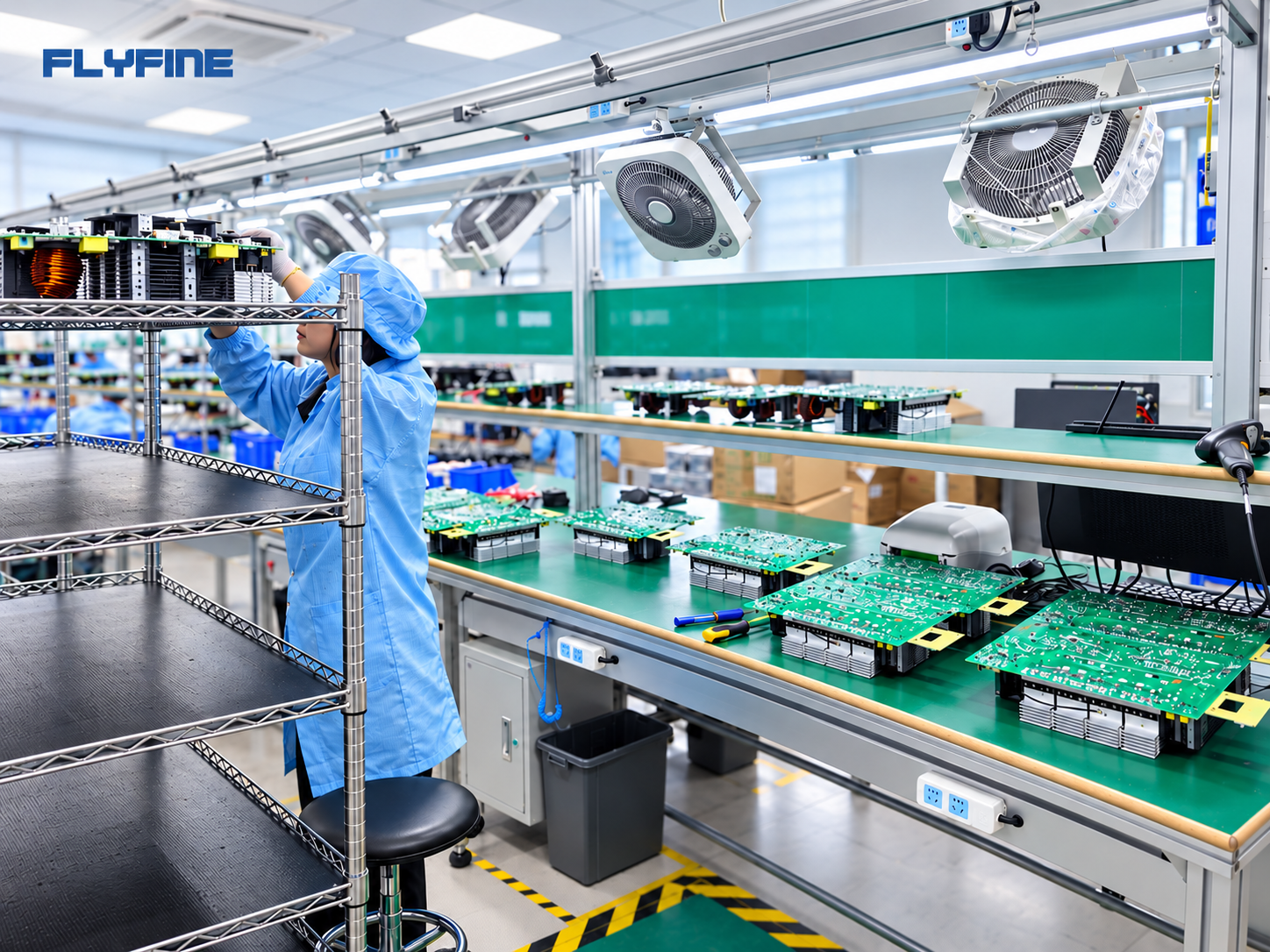
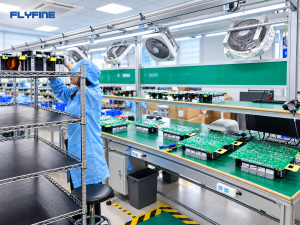
This is where FLYFINE connects directly with the market need. As a manufacturer of LiFePO4 battery systems and solar inverters, FLYFINE highlights 16+ years of R&D and design experience since 2008, 5MW daily production capacity and professional OEM/ODM/SKD support for global partners.
For Spanish-speaking partners, this means FLYFINE can support practical batería LiFePO4 para inversor híbrido solutions for residential storage, commercial backup power and customized OEM/ODM solar storage projects.
What Hybrid Inverter Solar Storage Projects Need from a Battery
A hybrid inverter solar storage project is not just a battery connected to solar panels. It is a complete energy system that may include PV modules, a hybrid inverter, LiFePO4 battery modules, BMS protection, grid input, backup loads and monitoring.
The hybrid inverter controls power flow between solar panels, the battery, the utility grid and electrical loads. FLYFINE provides hybrid solar inverter solutions for residential, commercial and energy storage applications, supporting distributors, installers and OEM/ODM partners worldwide.
System Compatibility
A reliable LiFePO4 battery for hybrid inverter projects should match the inverter voltage, charge and discharge current, communication protocol and protection logic.
Project Reliability
The battery should also match backup time, installation environment, expansion requirements, monitoring needs and after-sales support expectations.
For Spanish-speaking customers searching for batería para inversor híbrido, the real question is not only “How many kWh does the battery have?” The more important question is: Can this battery work stably with the hybrid inverter and the whole solar storage system?
Why FLYFINE Uses LiFePO4 for Solar Storage
FLYFINE uses LiFePO4 battery technology because solar storage systems usually require daily charging and discharging. In a residential autoconsumo solar con batería system, solar panels generate electricity during the day, the battery stores excess energy, and the stored power can be used at night, during cloudy periods or during power outages.
LiFePO4 is suitable for this application because solar storage requires stable performance, long cycle life and strong safety characteristics. FLYFINE’s residential energy storage systems use Grade-A LiFePO4 cells and cover product options from 2.56kWh to 25kWh, including wall-mounted, rack-mounted and all-in-one home ESS solutions.
For Spanish-speaking markets, this is why batería LiFePO4 has become a practical search term. Customers are not only looking for a lithium battery. They are looking for a solar storage battery that can support daily use, backup power and long-term operation.
How FLYFINE Matches Battery Voltage with Hybrid Inverters
Voltage matching is one of the first steps in building a LiFePO4 battery solution for a hybrid inverter project.
48V Residential Systems
Some residential systems use 48V battery platforms. For low-voltage residential projects, FLYFINE’s FYP Series 5–12kW 48V hybrid storage inverter supports lithium and lead-acid batteries, MPPT solar charging, Wi-Fi monitoring and multiple communication interfaces depending on the model.
High-Voltage Storage Systems
For larger residential or commercial storage projects, FLYFINE’s 204.8V–512V high voltage rack mount battery uses LiFePO4 chemistry and provides system energy options from 20.48kWh to 51.20kWh.
This product range allows FLYFINE to support different hybrid inverter solar storage projects, from smaller home systems to larger almacenamiento solar applications.
For installers and distributors, correct voltage matching helps reduce system risks. If the battery voltage range does not match the inverter, the system may fail to charge properly, discharge unstably or trigger protection errors. That is why FLYFINE builds battery solutions around the full system, not only around battery capacity.
How FLYFINE Designs Capacity Around Real Energy Demand
Battery capacity should be designed according to actual energy demand, not only according to inverter power. For example, a 5kW hybrid inverter does not automatically require a 5kWh battery. The right battery size depends on the project’s loads, backup time, solar generation, daily energy use and future expansion plan.
When building a battery solution, FLYFINE considers questions such as:
- What loads need backup power?
- How long should the backup system run?
- Is the battery used daily or mainly during outages?
- Does the user want solar self-consumption, backup power or both?
- Is the system for a home, small business or commercial project?
- Will the customer expand the battery bank later?
- Does the local market prefer wall-mounted, rack-mounted or all-in-one systems?
For Spanish-speaking distributors and installers, this is especially important because customer needs vary by region. A homeowner may search for batería solar para casa. A small business may need respaldo energético for essential equipment. A project developer may need a larger battery bank for commercial peak shaving or weak-grid support.
BMS Protection and Communication for Stable System Operation
A LiFePO4 battery solution is not only about cells and capacity. The BMS, or Battery Management System, is one of the most important parts of the system.
In a hybrid inverter solar storage project, the BMS helps monitor and protect the battery during charging, discharging and standby operation. It supports safer and more stable operation by managing cell voltage, current, temperature, state of charge and protection functions.
BMS Protection
- Overcharge protection
- Over-discharge protection
- Overcurrent protection
- Short circuit protection
- Temperature monitoring
Inverter Communication
In many hybrid inverter projects, the battery and inverter need to communicate through CAN, RS485 or other interfaces. When communication works properly, the inverter can read battery status and manage charging and discharging more intelligently.
For customers searching for batería LiFePO4 para inversor híbrido, this communication layer is often the difference between a basic battery pack and a real solar storage solution.
Residential Battery Solutions for Home Solar Storage
Residential solar storage is one of the most common applications for hybrid inverter battery systems. A home solar storage project usually focuses on improving solar self-consumption, reducing dependence on the grid and providing backup power during outages.
For home solar storage and backup power, FLYFINE provides residential energy storage systems based on LiFePO4 battery technology, with wall-mounted, rack-mounted and all-in-one home ESS options.
For Spanish-speaking markets, this directly connects with terms such as batería solar para casa, autoconsumo solar con batería and sistema de respaldo solar.
A residential customer may not understand all technical details of voltage range, BMS communication or inverter protocol. But they do understand the final result: the system should store solar energy during the day and provide power when needed.
Commercial and Larger Solar Storage Applications
Hybrid inverter solar storage projects are not limited to homes. Commercial users may need battery systems for backup power, peak shaving, load shifting or improved energy management.
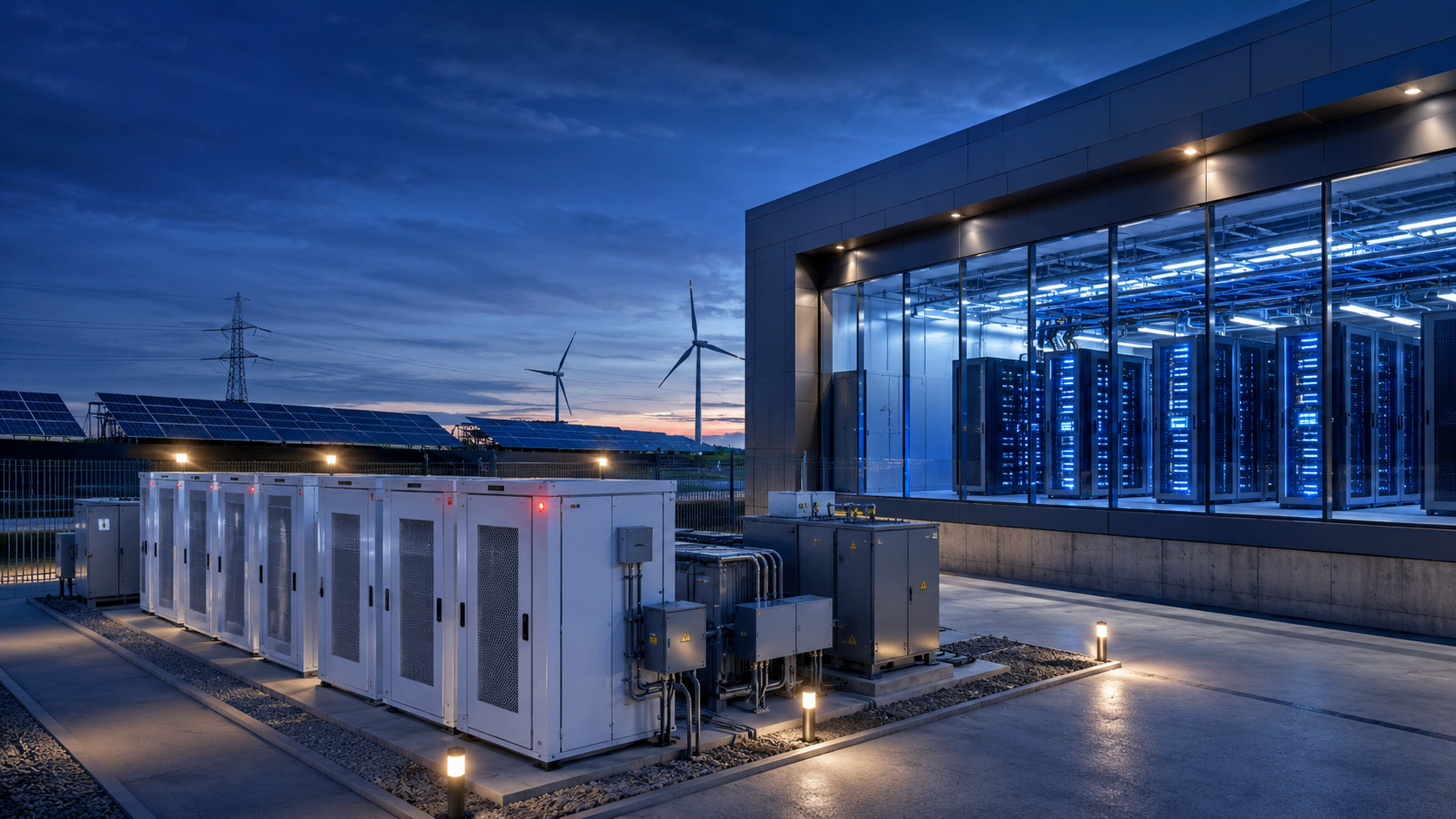
For C&I applications, FLYFINE provides commercial energy storage systems for backup power, peak shaving, load shifting and PV + ESS microgrid projects. These solutions are designed for factories, industrial parks, commercial buildings, remote sites and weak-grid applications.
For Spanish-speaking project partners, this can apply to almacenamiento de energía solar for small factories, farms, shops, telecom sites, warehouses and weak-grid areas.
The key is not simply choosing a larger battery. The key is designing a storage system that matches the hybrid inverter, load requirements, installation environment and after-sales support plan.
Customized OEM/ODM Support for Different Project Needs
OEM/ODM should not be separated from the topic of hybrid inverter solar storage projects. It is part of how FLYFINE builds suitable LiFePO4 battery solutions for different partners and markets.
Every market has different requirements. A Spanish-speaking distributor may need private-label packaging for a batería LiFePO4 product line. An installer may need battery communication matched with a specific inversor híbrido. A project developer may need a customized cabinet or scalable configuration for commercial almacenamiento solar.
For distributors and local solar brands, FLYFINE’s OEM/ODM energy storage solutions support lithium batteries, solar inverters and energy storage solutions for global brands, distributors and project partners. FLYFINE also highlights product selection support, OEM/ODM cooperation and fast quotation response for energy project partners.
- Logo and label customization
- Product appearance customization
- Hardware and software customization
- Battery capacity and voltage configuration
- BMS and inverter communication matching
- Structural design and electrical design support
- BMS/PCS matching, system integration and testing
- SKD/CKD assembly support
- Technical documentation support
- Project-based product selection
For example, a local brand may want to launch a batería de litio para sistema solar under its own brand name. Instead of developing the full product from zero, the partner can work with FLYFINE to select the right battery platform, confirm inverter compatibility, customize branding and prepare for local sales.
Why Spanish-Speaking Partners Need Reliable Battery Matching
Spanish-speaking solar markets are not all the same. In Spain, many users already understand autoconsumo solar and are looking for ways to improve solar self-consumption with battery storage. In Latin America, some users focus on electricity cost reduction, while others need backup power because of grid instability, rural locations or weak-grid conditions.
But across these markets, the technical challenge is similar: the battery must work with the inverter and the real project environment.
- Inverter communication errors
- Charging instability
- Lower usable capacity
- Shorter battery life
- More after-sales problems
- Customer complaints
- Higher installation costs
FLYFINE helps reduce these risks by considering the battery, inverter, BMS, communication protocol and project scenario together.
How FLYFINE Builds the Solution Step by Step
- Identify the project application. Is the system for a home, business, farm, telecom site or commercial building? Is the main goal self-consumption, backup power, off-grid use or energy cost reduction?
- Check the hybrid inverter requirements. This includes inverter power, voltage range, communication interface, charge and discharge current and supported battery type.
- Select the battery platform. A 48V solution may be suitable for smaller residential systems, while a high-voltage rack-mounted solution may be better for larger projects.
- Design capacity around actual demand. FLYFINE considers load power, backup time, daily energy usage, solar generation and future expansion.
- Confirm BMS communication and protection logic. This helps the battery and inverter operate safely and reduces system mismatch risks.
- Select the installation format. Depending on the project, the solution may use wall-mounted, rack-mounted, standing-type or all-in-one ESS products.
- Add OEM/ODM customization when needed. This may include branding, packaging, configuration, software or hardware customization and technical documentation.
Why Choose FLYFINE for Hybrid Inverter Solar Storage Projects?
FLYFINE is suitable for hybrid inverter solar storage projects because the company combines battery manufacturing, inverter knowledge, energy storage product design and OEM/ODM support.
For project partners, the main value is not only buying a battery. The value is working with a manufacturer that understands how the battery fits into the whole solar storage system.
- 16+ years of LiFePO4 battery and solar inverter R&D/design experience since 2008
- 5MW daily production capacity
- LiFePO4 battery systems for residential and commercial storage
- Hybrid inverter product support
- 48V and high-voltage battery options
- BMS and communication matching support
- OEM/ODM/SKD project support
- Product selection and technical configuration support
- Flexible solutions for global distributors, installers and project partners
For Spanish-speaking markets, this means FLYFINE can support customers looking for batería LiFePO4, inversor híbrido, almacenamiento solar, sistema de respaldo solar and soluciones de baterías de litio.
Build a Better Hybrid Inverter Solar Storage Project with FLYFINE
Spanish-speaking solar markets are creating strong opportunities for hybrid inverter solar storage projects. FLYFINE connects directly with this demand by building LiFePO4 battery solutions around inverter compatibility, battery voltage, capacity design, BMS communication, installation method, monitoring, safety and future expansion.
Whether your project needs a residential batería LiFePO4 para inversor híbrido, a commercial solar storage system, or a customized OEM/ODM energy storage solution, FLYFINE can help you build a safer, more compatible and more scalable battery solution.
Contact FLYFINEFAQ
What is a LiFePO4 battery for hybrid inverter?
A LiFePO4 battery for hybrid inverter is a lithium iron phosphate battery designed to work with a hybrid solar inverter. It stores solar or grid energy and releases power when needed for self-consumption, backup power or off-grid use.
What does batería LiFePO4 para inversor híbrido mean?
Batería LiFePO4 para inversor híbrido means a lithium iron phosphate battery designed for a hybrid inverter solar storage system. It is commonly used in Spanish-speaking markets for residential solar storage, backup power and commercial energy storage projects.
Why is inverter compatibility important?
Inverter compatibility is important because the battery must match the inverter’s voltage range, current limits, communication protocol and charging logic. Poor matching can cause communication errors, unstable charging or system shutdowns.
Can FLYFINE support OEM/ODM LiFePO4 battery projects?
Yes. FLYFINE provides OEM/ODM support for lithium batteries, solar inverters and energy storage solutions for global brands, distributors and project partners.
What battery options does FLYFINE provide for solar storage?
FLYFINE provides different LiFePO4 battery and ESS options, including residential energy storage systems, wall-mounted batteries, rack-mounted batteries, all-in-one ESS products and high-voltage rack-mounted battery systems.
Is LiFePO4 suitable for daily solar storage use?
Yes. LiFePO4 battery technology is widely used in solar storage because it is suitable for daily charge and discharge applications, especially in home solar storage, backup power and hybrid inverter systems.